
Best Time to Visit Murchison Falls National Park The Complete Safari Timing Guide for 2026
Choosing the best time to visit Murchison Falls National Park is not just a planning detail it is the difference between a standard safari and a truly exceptional one. Located in northwestern Uganda, this park behaves like a living ecosystem that changes dramatically with rainfall, river levels, and wildlife movement patterns.
Unlike many safari destinations where timing only affects comfort, here it directly influences wildlife density, predator visibility, bird migration patterns, and even how powerful the iconic Murchison Falls appears.
This guide breaks down every season in detail, using real safari conditions rather than generic travel advice, so you can confidently choose the best time based on your travel goals.
Why Timing Matters in Murchison Falls National Park
Murchison Falls is shaped by a rare combination of savannah, river ecosystem, and tropical forest. The presence of the Nile River running through the park means wildlife does not behave uniformly throughout the year.
Instead, animals continuously respond to:
- water availability along the Nile corridor
- grass height across the northern savannah plains
- breeding cycles influenced by rainfall
- migration patterns of bird species
This creates a safari environment where timing affects visibility more than distance or effort.
Dry Season in Murchison Falls National Park the Classic Safari Experience

The dry season is widely regarded as the most reliable period for visiting Murchison Falls because it delivers the clearest wildlife viewing conditions.
During this time, grass becomes shorter and thinner, especially in the Buligi game tracks and northern savannah regions. This allows visitors to see deep into the landscape, often spotting animals from long distances.
Elephants move in predictable herds toward the Nile, giraffes’ cross open plains without obstruction, and buffaloes gather in large groups around remaining water sources. Because vegetation is reduced, predator detection also improves significantly, making lion and leopard sightings more common.
The boat safari along the Nile becomes especially rewarding during this season. Hippos cluster tightly in deep pools, crocodiles sunbathe on exposed riverbanks, and elephants frequently approach the water’s edge to drink.
Photographers benefit greatly because clear skies, warm golden light, and reduced humidity create ideal shooting conditions.
Peak Dry Season Maximum Wildlife Predictability
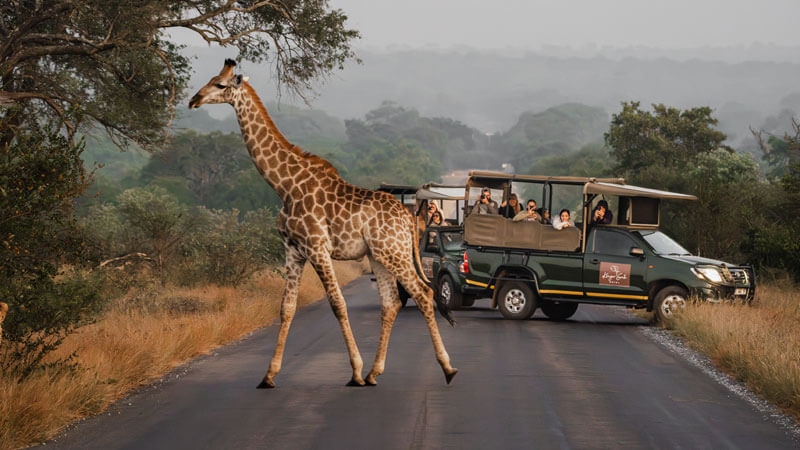
Within the dry season, there is a peak window where safari conditions become extremely consistent.
This is the period when wildlife concentrates heavily around permanent water sources along the Nile system. Game drives become more efficient because animal movement is less dispersed across the park.
Lions are often observed hunting Uganda kob in open savannah areas, while elephants appear in large herds crossing established migration paths. This is also the most reliable time for first-time safari travelers who want high-probability sightings.
However, it is also the busiest period for tourism activities, particularly around the river cruise routes leading to Murchison Falls.
Wet Season in Murchison Falls National Park the Green Transformation
The wet season transforms the entire landscape into a lush, vibrant ecosystem.
Grass grows tall across the savannah plains, forests become denser, and the entire park takes on a deep green color palette. While wildlife becomes more spread out, the experience becomes more natural and visually dramatic.
Birdwatching reaches its highest level during this period. Migratory species arrive in large numbers, wetlands expand across the Nile Delta, and breeding activity increases across multiple habitats.
One of the most important birding highlights is the increased visibility of rare species such as the shoebill stork in marshy areas near the river system.
The waterfall itself becomes more powerful and visually intense due to increased water flow, creating stronger mist, louder impact, and more dramatic photography opportunities.
Transitional Seasons the Hidden Safari Advantage
Between dry and wet seasons lie transitional months that many travelers overlook, yet they often provide some of the most balanced safari conditions.
During this period, the park maintains moderate vegetation levels, meaning wildlife is still relatively visible while landscapes remain green and fresh. Rainfall is present but not disruptive, allowing game drives and boat cruises to continue without major interruptions.
These months are also ideal for travelers seeking fewer crowds and more competitive lodge pricing while still enjoying strong wildlife encounters.
For photographers, transitional seasons are particularly valuable because they combine clarity with atmospheric skies and evolving landscapes.
Wildlife Viewing Across Seasons in Murchison Falls National Park
Wildlife behavior changes significantly depending on rainfall patterns.
During dry months, animals concentrate around water sources, making sightings more predictable and frequent. This includes large herds of elephants, buffaloes, and giraffes, as well as predators tracking prey in open savannah environments.
During wet months, animals disperse more widely across the park, making encounters less predictable but more natural. Instead of clustered sightings, visitors experience scattered, spontaneous wildlife moments.
Regardless of season, the Nile River remains the most reliable wildlife corridor, supporting hippos, crocodiles, elephants, and a wide variety of bird species throughout the year.
Best Time for Birdwatching and Photography
Birdwatching in Murchison Falls is consistently strong throughout the year, but peaks during wet seasons when migratory species arrive and wetlands expand significantly.
The Nile Delta region becomes a critical hotspot for rare species, especially water-dependent birds and seasonal visitors.
Photography varies based on timing:
- Dry season delivers clarity, sharp wildlife contrast, and predictable sightings
- Wet season offers dramatic skies, rich greenery, and atmospheric landscapes
- Transitional seasons provide the most balanced combination of both
This makes the park suitable for both wildlife photographers and landscape storytellers.
Best Time Based on Travel Goals
The ideal time to visit depends entirely on what kind of safari experience you want.
Dry seasons are best suited for travelers who prioritize:
- consistent wildlife sightings
- easier game drives
- classic African safari conditions
Wet seasons are ideal for travelers who prefer:
- birdwatching diversity
- fewer tourists
- dramatic scenery and photography
Transitional seasons work best for travelers seeking:
- balanced conditions
- moderate pricing
- fewer crowds with good visibility
Each season reveals a different personality of the park rather than a better or worse version of it.
Nearby Safari Circuit Context (Important for Planning)
Most safari itineraries combine Murchison Falls with other Uganda destinations such as:
- Budongo Forest for chimpanzee trekking
- Ziwa Rhino Sanctuary for rhino tracking
- Queen Elizabeth National Park for tree-climbing lions
- Bwindi Impenetrable National Park for gorilla trekking
This broader circuit matters because season choice can affect multi-park travel efficiency.
Frequently Asked Questions (FAQs)
What is the absolute best time to visit Murchison Falls National Park?
The most reliable safari conditions occur during dry seasons when wildlife is easier to spot and roads are fully accessible.
Can you visit Murchison Falls during the rainy season?
Yes. The park remains open year-round, and wet seasons offer excellent birdwatching and dramatic landscapes, despite reduced wildlife predictability.
Is wildlife easier to see in the dry season?
Yes. Animals concentrate around water sources, improving visibility and increasing the chances of predator sightings.
Does the boat safari operate all year?
Yes. Boat cruises along the Nile operate throughout the year, though water levels and scenery change seasonally.
How many days are ideal for Murchison Falls?
Most travelers spend 2 to 4 days to experience game drives, the waterfall, and the Nile boat safari properly.
Is Murchison Falls better than other Uganda parks?
It offers a unique combination of savannah wildlife, river ecosystems, and dramatic waterfalls, making it one of the most diverse safari destinations in Uganda.
Final Verdict the Truth About the Best Time to Visit
There is no single perfect time to visit Murchison Falls National Park only different experiences shaped by the season you choose.
Dry seasons deliver structure, predictability, and classic safari encounters. Wet seasons deliver color, solitude, and ecological richness. Transitional seasons offer balance between both.
What makes Murchison Falls exceptional is that it never stops being rewarding it simply changes form. The Nile continues to carve through the landscape, wildlife continues to adapt, and every season reveals a new version of the same extraordinary wilderness.


