
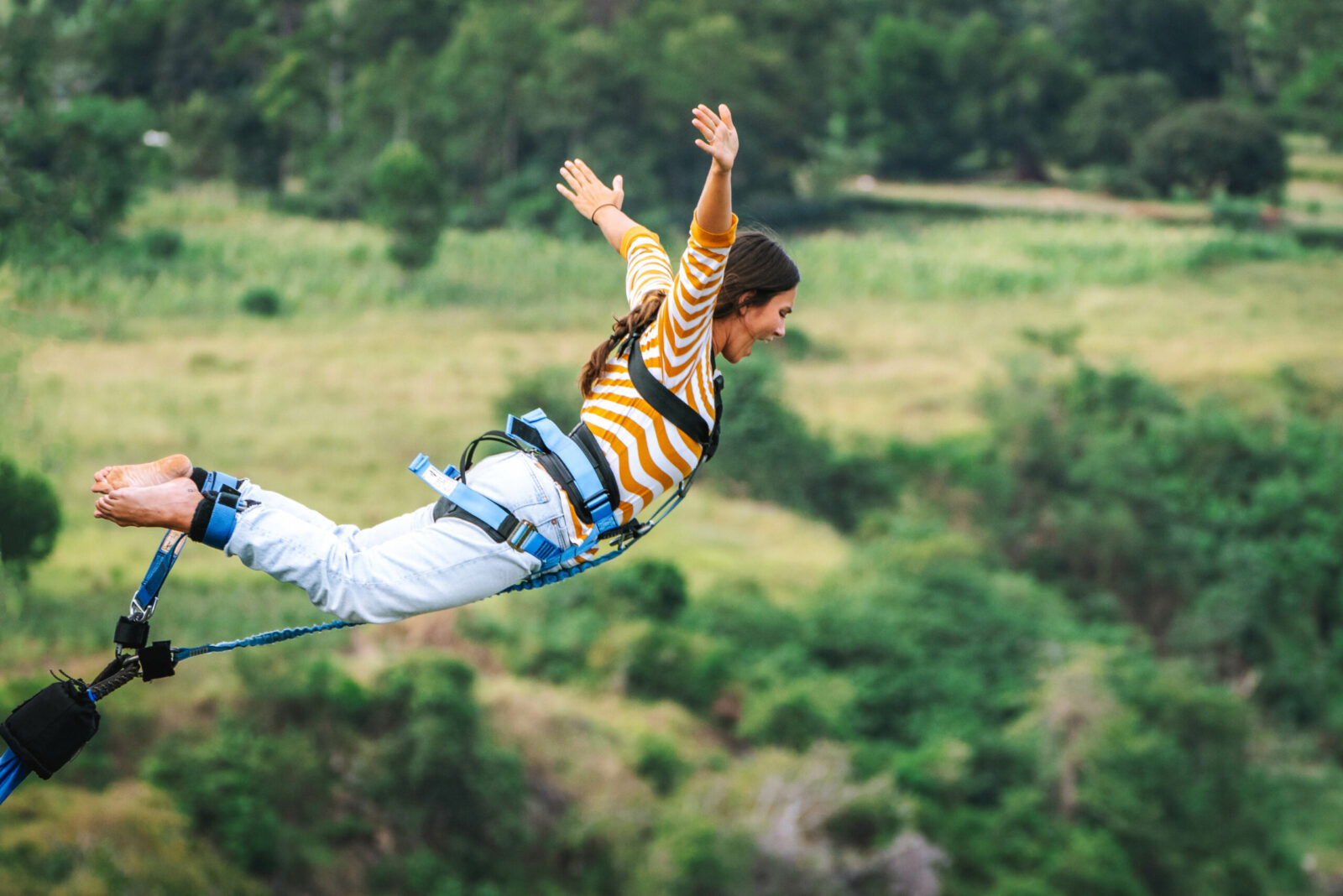
Bungee jumping in Jinja is one of the most exciting adventure activities in Africa and a highlight for travelers seeking an adrenaline-filled experience on the Nile River. Suspended high above one of the world’s most famous waterways, the jump combines breathtaking scenery, professional safety systems, and the unforgettable rush of free fall.
While Uganda is globally known for gorilla trekking, wildlife safaris, and spectacular landscapes, Jinja has earned a different reputation. It is widely recognized as East Africa’s adventure capital. Visitors travel here to experience white-water rafting, kayaking, quad biking, horseback riding, river tubing, and sunset cruises. Yet among all these activities, bungee jumping in Jinja remains one of the most iconic experiences.
For many travelers, the jump is more than a few seconds of adrenaline. It becomes a personal challenge, a test of courage, and often the most memorable moment of an entire Uganda safari.
Whether you are considering your first jump or comparing adventure experiences across Africa, understanding the complete experience can help you decide if bungee jumping in Jinja deserves a place on your itinerary.
Why Bungee Jumping in Jinja Is Different from Other Bungee Jumps
Many destinations around the world offer bungee jumping. However, few combine natural beauty and adventure as effectively as Jinja.
Unlike urban bridge jumps surrounded by roads and buildings, bungee jumping in Jinja takes place above the Nile River. The surrounding scenery creates a feeling of openness and wilderness that enhances the experience.
The jump platform extends over the river, providing unobstructed views in every direction. Before the jump, participants can watch the Nile flowing beneath them while observing rafting crews navigating nearby rapids.
Furthermore, the setting creates an experience that feels uniquely African. The combination of tropical scenery, river landscapes, and adventure tourism gives Jinja a distinctive character that cannot easily be replicated elsewhere.
As a result, many travelers rank the experience among the best adventure activities available in East Africa.
The Rise of Jinja as East Africa’s Adventure Capital
The popularity of bungee jumping in Jinja is closely connected to the town’s development as an adventure destination.
Located near the source of the Nile River,Travelers have long recognized Jinja as East Africa’s adventure capital.Over the years, adventure tourism operators recognized the region’s potential and began introducing activities designed to showcase the river’s power and beauty.
White-water rafting initially put Jinja on the international tourism map. Adventure seekers quickly discovered that the Nile offered some of the most exciting commercial rafting experiences in the world.
As visitor numbers increased, adventure operators introduced additional experiences such as kayaking, river boarding, mountain biking, and bungee jumping.
Today, Jinja attracts thousands of international visitors annually and remains one of Uganda’s most important tourism destinations.
Is Bungee Jumping in Jinja Safe?
The most important question for most first-time jumpers is straightforward: Is bungee jumping in Jinja safe?
The answer depends on understanding how professional bungee operations are managed.
Modern bungee jumping relies on engineering, rigorous safety procedures, equipment inspections, and highly trained personnel. Professional operators follow strict standards designed to minimize risk while maintaining an exciting experience.
Every jump involves multiple layers of safety. Equipment is inspected regularly, jump cords are monitored closely, harnesses undergo routine checks, and trained staff oversee each stage of the process.
Importantly, participants are not simply attached to a cord and sent over the edge. Several independent checks take place before every jump.
Consequently, professional bungee operations focus heavily on prevention, precision, and consistency.
Understanding the Safety Standards Behind the Jump
One reason bungee jumping in Jinja has maintained its popularity is the emphasis placed on internationally recognized safety practices.
The equipment used in professional bungee operations is designed specifically to withstand the forces generated during a jump.The jump team selects every cord according to the participant’s weight.
Additionally, operators maintain detailed maintenance schedules for all equipment.Technicians regularly inspect harnesses, carabiners, cords, and structural components and replace them whenever necessary.
Staff members are trained to follow established procedures rather than relying on personal judgment alone. This reduces the possibility of human error and creates consistency across every jump.
Furthermore, the operators incorporate backup systems into every jump. Multiple attachment points provide redundancy, ensuring additional layers of security throughout the experience.
These systems may not eliminate every risk associated with adventure tourism, but they significantly improve safety and reliability.
The Science of Bungee Jumping
Understanding the science behind bungee jumping often helps nervous participants feel more confident.
When a jumper steps from the platform, gravity accelerates the body toward the river. During the initial phase, the jumper experiences freefall.
As the cord reaches maximum extension, it begins absorbing kinetic energy generated during the descent. Instead of stopping abruptly, the elastic properties of the cord gradually slow the jumper.
This process reduces stress on the body while creating the smooth rebound effect associated with bungee jumping.
The cord then contracts, sending the jumper upward before a series of progressively smaller rebounds occur.
Consequently, the experience feels more controlled than many people expect before attempting their first jump.
The Psychology of First-Time Jumpers
One of the most fascinating aspects of bungee jumping in Jinja is the psychological journey participants experience.
Long before reaching the platform, most people feel excited. They talk confidently about the jump and eagerly anticipate the experience.
However, everything changes when they stand at the edge.
At that moment, the human brain activates powerful survival instincts designed to prevent falls from dangerous heights. Rationally, participants understand the equipment is secure. Emotionally, however, every instinct tells them not to jump.
This internal conflict explains why even confident travelers often hesitate.
Interestingly, experienced jump masters report that fear is entirely normal. Jumpers do not need to eliminate fear; they simply need to move forward despite it.
Many jumpers later describe the experience as empowering because they overcome hesitation and learn to trust the process.
What It Feels Like to Jump
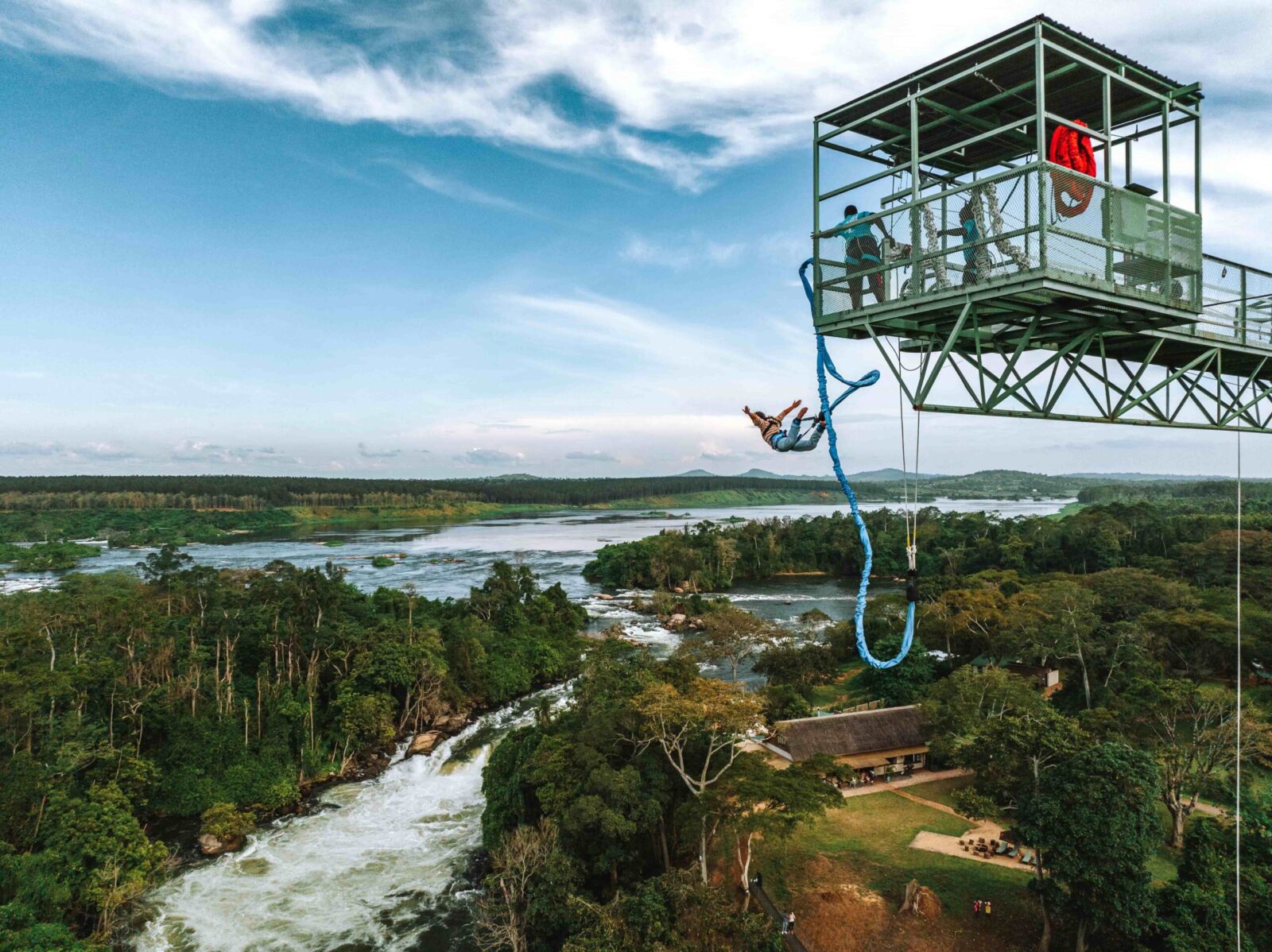
The countdown begins.
Three.
Two.+
One.
For a brief moment, there is complete commitment.
As your feet leave the platform, you leave the fear behind almost instantly. The mind shifts from anticipation to pure experience.
The Nile rushes upward. The wind becomes louder. Time appears to slow down.
For several seconds, there is nothing except movement, speed, and adrenaline.
Then the cord begins to stretch.
Instead of a violent stop, there is a smooth transition as the energy of the fall is absorbed. Moments later,The rebound creates a sensation that many jumpers describe as flying.
Many jumpers describe this phase as feeling closer to flying than falling.
By the time the bouncing gradually subsides, most participants are smiling, laughing, and wondering why they were nervous in the first place.
Solo or Tandem Bungee Jumping in Jinja
One decision travelers often face is whether to jump alone or with a partner.
A solo jump provides a deeply personal experience. The achievement belongs entirely to the individual, making it particularly appealing to those seeking a personal challenge.
Tandem jumps offer a different type of excitement. Couples, friends, and family members often choose this option because it allows them to share the experience together.
The emotional support of another person can make the jump feel less intimidating. At the same time, coordinating the jump adds another dynamic to the experience.
Ultimately, both options create unforgettable memories, and the best choice depends on personal preferences.
How Much Does Bungee Jumping in Jinja Cost?
Cost is an important consideration when planning an adventure itinerary.
Bungee jumping in Jinja is generally considered affordable compared to similar experiences in Europe, Australia, and North America.
Prices vary depending on the operator, season, package inclusions, and whether you choose a solo or tandem jump.
Typically, visitors can expect to pay between USD 115 and USD 150 for a standard solo jump.
Tandem jumps generally cost more because of the additional equipment and operational requirements involved.
Some operators also offer combination packages that include rafting, river tubing, kayaking, or accommodation.
While the jump itself lasts only a few seconds, travelers are paying for highly specialized equipment, trained personnel, safety systems, insurance requirements, and access to a unique location.
Best Time for Bungee Jumping in Jinja
One advantage of visiting Jinja is that bungee jumping can be enjoyed throughout most of the year.
However, weather conditions can influence visibility and comfort.
Most travelers consider the dry seasons, which generally occur between December and February and again between June and September, the best periods for adventure activities.
During these months, skies are typically clearer and rainfall is less frequent.
Nevertheless, the green seasons also have their appeal. The surrounding landscapes become especially vibrant, creating beautiful scenery for photography.
Because professional teams manage the activity throughout the year, operators monitor weather conditions closely and adjust operations when necessary.
Therefore, visitors can enjoy bungee jumping in Jinja during most months of the year.
Photography and Video Packages
One of the most common regrets among first-time jumpers is failing to capture the experience properly.
Fortunately, many operators provide professional photography and video services designed specifically for adventure activities.
Professional photographers typically capture the preparation process, the moment of the jump, the freefall, and the recovery phase.
Professional videographers often use multiple camera angles that participants cannot easily capture themselves.
Additionally, high-quality photographs allow travelers to relive the experience long after their trip has ended.
For many visitors, investing in photography and video packages becomes worthwhile because the images serve as lasting reminders of a once-in-a-lifetime adventure.
What Should You Wear?

Choosing appropriate clothing can make the experience more comfortable.
Comfortable athletic clothing is generally recommended. Clothing should fit securely without being excessively loose.
Loose items such as phones, wallets, keys, jewelry, and sunglasses should be removed before the jump.
Closed footwear is usually preferable because it remains secure throughout the activity.
Participants should also avoid clothing that restricts movement or interferes with the harness system.
Simple, practical attire is usually the best choice.
Combining Bungee Jumping with Other Jinja Activities
One reason travelers love visiting Jinja is the ability to combine multiple adventures within a short period.
White-water rafting remains the most popular combination.
Many visitors choose to complete a morning jump before heading onto the river for a full day of rafting.
Others prefer to spread activities across several days to maximize enjoyment and recovery time.
Beyond rafting, visitors can explore kayaking, tubing, horseback riding, quad biking, mountain biking, sunset cruises, fishing trips, and cultural experiences.
As a result, Jinja can easily support multi-day adventure itineraries.
A Complete Adventure Weekend in Jinja
Travelers with limited time often wonder how to maximize their visit.
A typical adventure weekend might begin with arrival on Friday afternoon, followed by a sunset cruise on the Nile.
Travelers often dedicate Saturday to white-water rafting and river activities.
Many travelers choose Sunday morning for bungee jumping in Jinja because they are already familiar with the river environment and have had time to settle into the destination.
This combination creates a balanced itinerary that blends excitement, scenery, and relaxation.
Beyond Adventure: Why Jinja Deserves More Time
Although adventure tourism attracts most visitors, Jinja offers much more than adrenaline activities.
The town’s relaxed atmosphere, riverside restaurants, cultural heritage, and scenic landscapes create an appealing destination even for non-adventure travelers.
Visitors can explore local markets, enjoy river cruises, visit nearby communities, and learn about the historical significance of the Nile.
Consequently, many travelers discover that Jinja deserves more than a quick overnight stop.
Frequently Asked Questions About Bungee Jumping in Jinja
How high is bungee jumping in Jinja?
The jump platform stands approximately 44 metres above the Nile River, creating an exciting freefall experience.
Is bungee jumping in Jinja safe?
Professional operators use internationally recognized safety procedures, specialized equipment, and multiple safety checks before every jump.
Can beginners try bungee jumping?
Yes. Many participants are first-time jumpers with no previous experience.
What is the minimum age for bungee jumping?
Age requirements may vary slightly by operator, so travelers should confirm current policies before booking.
Can I touch the Nile during the jump?
Depending on water levels and operational conditions, operators can adjust some jumps to provide a controlled water touch.
Can I combine bungee jumping with rafting?
Yes. This is one of the most popular adventure combinations in Jinja.
How much does bungee jumping in Jinja cost?
Prices typically range from approximately USD 115 to USD 150 for a standard solo jump, although costs may vary.
What happens if I become too scared to jump?
You will never be forced to jump. Staff understand that fear is natural and will support your decision.
Is a tandem jump better than a solo jump?
Neither is inherently better. The choice depends on whether you prefer a personal challenge or a shared experience.
What should I bring on the day?
Comfortable clothing, secure footwear, identification, and a sense of adventure are usually all you need.
Conclusion: Why Bungee Jumping in Jinja Should Be on Your Uganda Bucket List
Bungee jumping in Jinja is far more than a short adrenaline rush above the Nile River. It represents a unique combination of adventure, personal achievement, spectacular scenery, and unforgettable memories. Few experiences challenge both the body and mind so effectively while rewarding participants with such a powerful sense of accomplishment.
Whether you are an experienced thrill-seeker or a first-time jumper, bungee jumping in Jinja challenges you to step beyond your comfort zone and discover what you can achieve.. Furthermore, its location in Uganda’s adventure capital allows you to combine the jump with rafting, kayaking, river cruises, and numerous other activities that showcase the beauty and energy of the Nile.
If you are planning a Uganda safari or an adventure holiday in East Africa, bungee jumping in Jinja deserves serious consideration. With professional safety systems, world-class scenery, and a reputation as one of Africa’s most iconic adventure experiences, it remains one of the most rewarding ways to experience the Nile. Start planning your Jinja adventure today with us and discover why so many travelers consider this leap above the Nile the highlight of their journey through Uganda.


