
Chimpanzee Trekking in Kyambura Gorge (2026 Complete Expert Guide)
Kyambura Gorge is one of the most unusual and dramatic primate trekking destinations in East Africa. Hidden inside the wider savannah system of Queen Elizabeth National Park, this deep forest canyon feels like a completely separate world. From above, it looks like a sudden crack in the earth. Inside, it transforms into a dense, humid rainforest filled with life, sound, and movement.
Locals often call it the “Valley of Apes,” and that name fits well. The gorge delivers a rare mix of chimpanzee trekking, rainforest hiking, and geological exploration in one continuous experience. Unlike large forest systems where chimpanzees live in stable, high-density populations, Kyambura Gorge holds a small, isolated group. This makes every trek unpredictable but also deeply natural and immersive.
This guide explains everything you need to know about chimpanzee trekking in Kyambura Gorge, including how the experience works, what to expect, costs, timing, and how it compares with other trekking locations in Uganda.
Understanding Kyambura Gorge as a Living Ecosystem
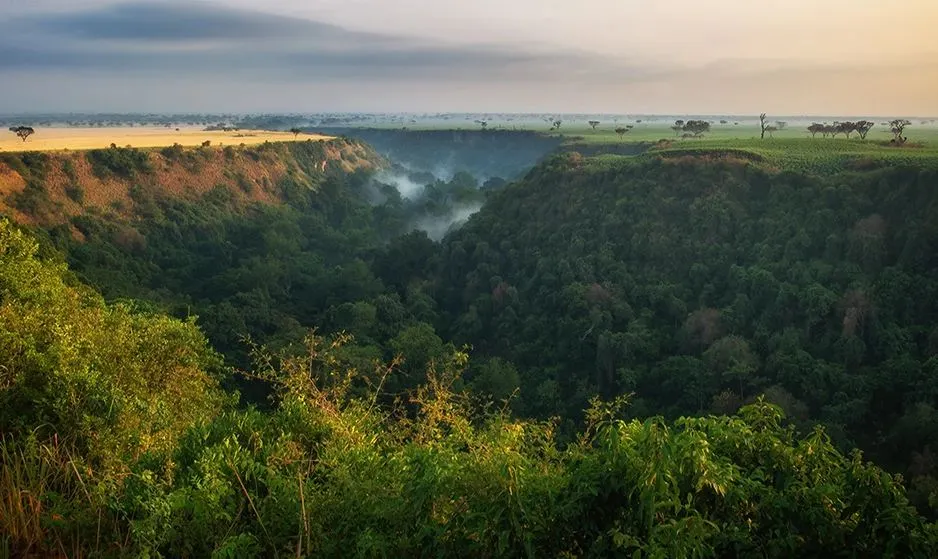
Kyambura Gorge stretches for about 16 kilometers. The Kyambura River carved it over thousands of years as it cut through the savannah plains. From above, visitors see a deep crack in the earth. Inside, they find a thick tropical forest.
This structure creates a sharp ecological contrast. While the top of the park stays hot, open, and dry, the bottom of the gorge stays cooler, wetter, and shaded. As visitors descend, they immediately feel this change in temperature and humidity.
Inside the gorge, vegetation grows in dense layers. Tall trees form a canopy that blocks sunlight, while vines, shrubs, and undergrowth fill the forest floor. This structure supports a completely different ecosystem compared to the savannah outside.
Within the wider landscape of Queen Elizabeth National Park, the gorge acts like a biological pocket. It connects savannah and forest ecosystems and creates a rare overlap of wildlife zones in one protected area.
Why Chimpanzees Live in an Isolated Forest System
Chimpanzees in Kyambura Gorge live in a fragmented habitat. They remain separated from other chimp communities due to the gorge’s isolation.
Over time, this isolation has shaped their behavior and movement patterns. They travel shorter distances, depend heavily on seasonal fruiting trees, and shift locations frequently within the gorge.
Food availability changes quickly within small forest zones, so chimpanzees do not stay in fixed territories. Instead, they move dynamically across the canyon. This makes tracking more challenging but also more realistic in terms of wild behavior.
This isolation also means sightings are not guaranteed. However, when encounters happen, visitors experience them in a very natural setting because chimpanzees avoid predictable tourist interaction zones.
What Makes Chimpanzee Trekking in Kyambura Gorge Unique
Chimpanzee trekking in Kyambura Gorge does not guarantee sightings. Instead, guides lead a tracking-based experience where visitors follow chimpanzees in real time.
The experience becomes special not only because of the chimps but also because of the forest journey itself.
The trek begins at the savannah edge and quickly descends into a dense rainforest canyon. This shift happens fast and feels like entering a completely different world.
Unlike safari drives, this experience depends on walking and tracking. Rangers actively read forest signs such as calls, broken branches, and feeding marks to locate chimpanzees.
The Trekking Experience Step by Step
Chimpanzee trekking in Kyambura Gorge starts early in the morning at the ranger station. Guides first brief visitors on safety rules, forest behavior, and trekking expectations.
After the briefing, the group descends into the gorge. The path feels steep and quickly shifts from savannah grassland into thick forest vegetation. The environment changes within minutes.
Inside the forest, visibility drops. Visitors stop relying on sight alone. Instead, guides track chimpanzees using sounds, footprints, fresh feeding signs, and movement clues.
Chimpanzees move often. They may feed in one area and shift several kilometers within hours. Because of this behavior, trekking time changes from day to day.
When visitors find the chimpanzees, the experience shifts from tracking to observation. Guests often witness grooming, feeding, vocal communication, and group movement.
These moments feel very close and natural because the forest limits distance and visibility.
Chimpanzee Behavior in Kyambura Gorge

Chimpanzees in this region live in small to medium groups. They move through the forest in search of fruiting trees and seasonal food sources.
They communicate constantly using vocal calls, gestures, and physical interaction.
Because the gorge is narrow and isolated, chimpanzees move more through the canopy. They climb often and feed in upper forest layers.
Sightings remain unpredictable because chimpanzees move based on food availability, not fixed routes.
Trek Difficulty and Physical Expectations
Chimpanzee trekking in Kyambura Gorge requires moderate fitness.
Visitors descend steeply into the gorge at the start of the trek. The return climb often feels more demanding, especially in wet conditions.
The forest floor contains roots, rocks, and muddy sections. These conditions require careful walking and stable footing.
Although the trek feels demanding, it does not require technical climbing skills. Most travelers complete it with steady pacing.
Best Time for Chimpanzee Trekking
Chimpanzee trekking in Kyambura Gorge takes place throughout the year, but seasonal conditions affect comfort and tracking success.
During dry seasons, trails stay easier to walk. Vegetation becomes less dense, and rangers track chimpanzees more efficiently.
During wet seasons, the forest becomes greener and more dramatic. However, trails become slippery, and trekking requires more effort. Chimpanzees also spread out more widely because food becomes more available.
Both seasons offer strong experiences, but they differ in comfort versus immersion.
Cost and Permit Information
The Uganda Wildlife Authority manages chimpanzee trekking permits in Kyambura Gorge.
Permits include ranger guidance, park access, and the tracking experience.
Compared to gorilla trekking, Kyambura permits cost less, which makes this experience more accessible for most safari travelers.
Travelers should book through licensed tour operators to secure permits and manage scheduling.
What to Pack for the Trek
Proper preparation improves the trekking experience significantly.
Lightweight long-sleeved clothing protects against insects and vegetation. Neutral colors help visitors blend into the forest environment.
Strong hiking shoes improve grip on slippery terrain. A small backpack with water, snacks, and basic supplies supports longer treks.
A waterproof jacket helps during sudden weather changes in the gorge.
Optional items like gloves and trekking poles also improve comfort and stability.
Conservation Importance of Kyambura Gorge
Kyambura Gorge plays an important ecological role within Queen Elizabeth National Park.
It connects savannah and forest ecosystems and supports multiple species beyond chimpanzees, including birds and small mammals.
The gorge also supports scientific research. Researchers study how chimpanzees adapt to fragmented habitats in this isolated environment.
This makes the area important for both tourism and conservation science.
Kyambura Gorge vs Other Chimpanzee Trekking Sites
Kyambura Gorge offers a different experience compared to larger trekking destinations like Kibale Forest.
Kibale provides higher sighting success because it supports a larger chimpanzee population and continuous forest cover.
Kyambura focuses more on landscape and wilderness immersion rather than guaranteed sightings.
Within Queen Elizabeth National Park, Kyambura stands out as the most atmospheric trekking destination.
Final Expert Insight
Chimpanzee trekking in Kyambura Gorge focuses on experience rather than guarantees.
The value comes from the forest environment, the tracking process, and the possibility of encountering wild chimpanzees in a natural setting.
Each trek differs. Some treks end quickly. Others take longer as guides track movement through dense forest. This unpredictability creates authenticity.
Within Uganda’s safari circuit, Kyambura Gorge adds a deep forest experience to savannah-based wildlife viewing.
Experience Kyambura Gorge Safari Adventure
A visit to Kyambura Gorge offers one of the most unique chimpanzee trekking experiences in East Africa.
Travelers often combine it with game drives, Kazinga Channel boat safaris, and Ishasha lion tracking for a complete safari circuit.
Plan your chimpanzee trekking experience with Ababa Uganda Safaris who understand forest tracking, chimpanzee behavior, and seasonal movement. In Kyambura Gorge, the journey, the search, and the encounter all matter equally.


