
Experience Gorilla Trekking Safari in Uganda: First-Hand Style 2026 Expert Guide
Introduction to Gorilla Trekking Safari in Uganda
A gorilla trekking safari in Uganda is one of those rare wildlife experiences that feels far beyond ordinary tourism. It is not a drive-through safari or a distant viewing experience. Instead, it is a slow, physical journey into dense rainforest where travelers meet mountain gorillas face to face in their natural home.
From a real on-the-ground perspective, the experience begins long before you see a gorilla. The forest itself sets the tone. The air becomes cooler, the vegetation thicker, and the silence deeper. Every step forward feels like entering a world that has existed for thousands of years with very little human interruption.
Uganda remains one of the most important gorilla trekking destinations in the world in 2026. It protects nearly half of the global mountain gorilla population, making it a critical conservation country and one of the most reliable places to see gorillas in the wild.
Unlike many safari experiences that rely on vehicles or open landscapes, gorilla trekking in Uganda happens entirely on foot. This creates a direct connection with the environment, where the forest becomes part of the journey and every sound matters.
What Gorilla Trekking in Uganda Feels Like in Reality
In practical terms, gorilla trekking starts early in the morning. The atmosphere at the briefing point is usually calm but filled with anticipation. Travelers meet rangers and guides who explain the rules clearly and assign groups based on fitness levels and gorilla family locations.
Once inside the forest, the experience changes quickly. Trails are often narrow and uneven. In many cases, the ground is soft from overnight rain. Vegetation can be thick enough to block visibility just a few meters ahead.
From real trekking conditions, one important truth stands out. No two treks are ever the same. Some groups find gorillas within an hour, while others hike for several hours through steep terrain. The movement of gorilla families determines everything.
As the trek continues, guides communicate with trackers who move ahead of the group. This coordination is constant and helps narrow down the gorillas’ location. The moment you begin hearing changes in bird calls or forest movement, guides often signal that the group is nearby.
Then everything becomes quiet. The forest feels different. And suddenly, the first gorilla appears.
Where Gorilla Trekking Safari in Uganda Actually Happens
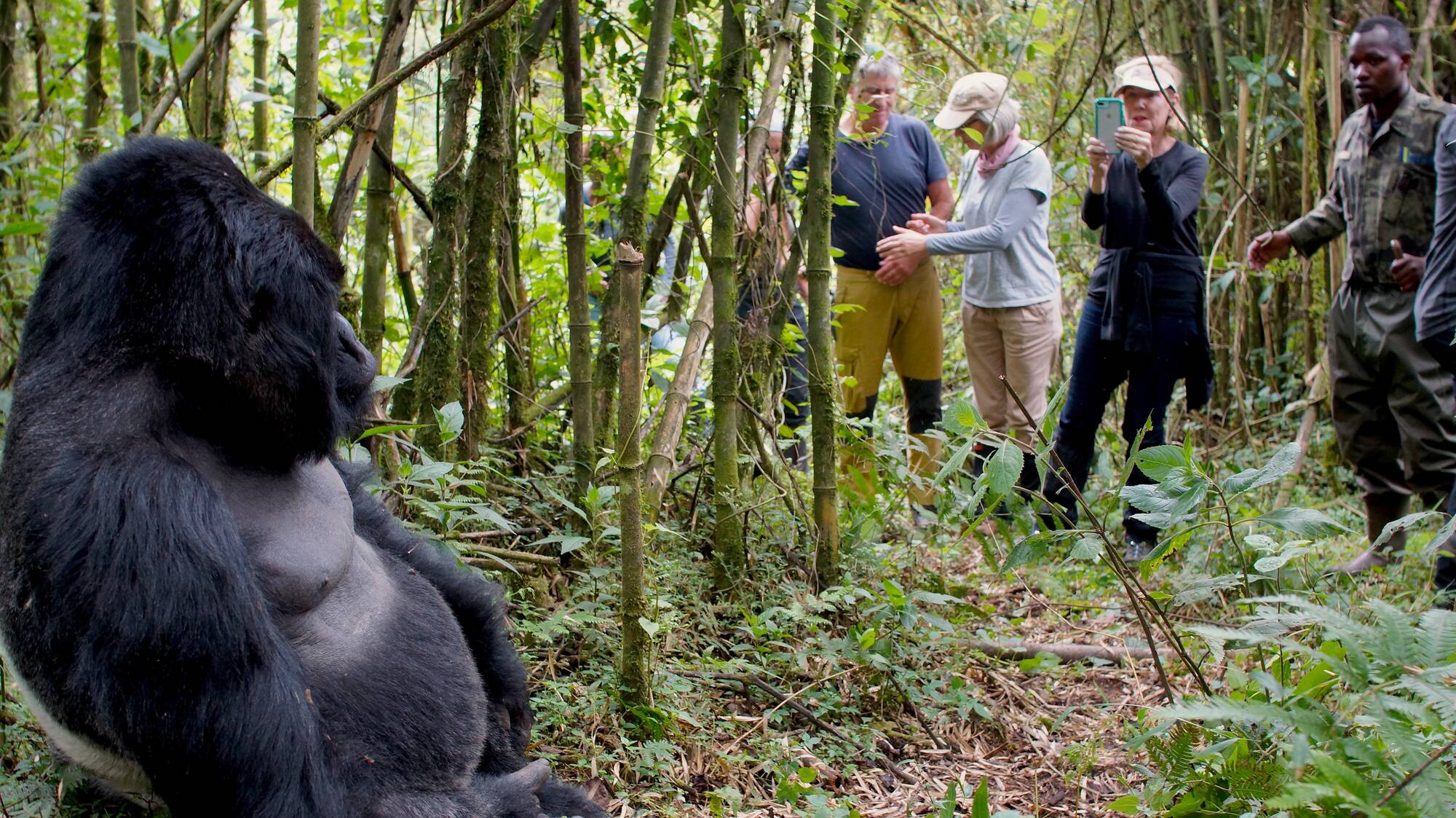
In real conservation practice, Uganda gorilla trekking happens in only two protected national parks. These are carefully managed ecosystems where tourism is strictly controlled.
The first is Bwindi Impenetrable National Park, which is the main trekking destination. The second is Mgahinga Gorilla National Park, which offers a smaller but more scenic trekking environment.
Both parks are part of a larger conservation system designed to protect mountain gorillas, regulate human contact, and support long-term survival of the species.
Bwindi Impenetrable National Park: Real Trekking Experience
Bwindi is the most active and widely used location for gorilla trekking in Uganda. It is not called “impenetrable” by chance. The forest is thick, ancient, and physically demanding.
From a first-hand trekking perspective, Bwindi feels like stepping into layered green silence. Trees grow closely together, vines hang across paths, and visibility changes constantly. Even during daytime, the forest can feel dim and enclosed.
What makes Bwindi special is the number of gorilla families spread across different trekking sectors. This distribution allows rangers to assign groups based on daily tracking updates.
In practical trekking experience, some areas of Bwindi involve steep climbs where guides often stop to allow travelers to rest. Other areas have more gradual paths but longer distances.
When gorillas are finally found in Bwindi, they are often relaxed and accustomed to human presence. A typical moment includes watching juveniles play near vines, females feeding calmly, and the dominant silverback sitting quietly but alert.
One detail often noticed in real encounters is how little disturbance gorillas show when humans follow rules correctly. The experience feels controlled but natural at the same time.
Mgahinga Gorilla National Park: First-Hand Trekking Feel

Mgahinga offers a very different atmosphere compared to Bwindi. From a trekking perspective, it feels more open, with bamboo forests replacing dense jungle in many areas.
The terrain is shaped by volcanic slopes, which means hikes often involve steady elevation changes but clearer walking paths in some sections.
There is only one habituated gorilla family here, the Nyakagezi group. This makes the experience more predictable in terms of tracking, but still wild in behavior.
From real visitor experience, Mgahinga feels quieter. Fewer trekkers enter the forest each day, which creates a more personal and less crowded encounter with gorillas.
The surrounding volcanic landscape also changes the experience. On clear days, trekkers can see multiple volcano peaks rising above the forest, adding a dramatic backdrop to the journey.
How a Gorilla Encounter Actually Unfolds
From a real trekking point of view, the final approach to gorillas is always slow and controlled. Guides lower their voices, and movement becomes more careful.
The first sign is usually sound. You may hear branches breaking or low grunts before seeing anything.
Then the forest opens slightly.
A gorilla family is often found resting, feeding, or slowly moving through vegetation. The silverback is usually the most noticeable presence due to size and calm authority.
One of the most memorable aspects of the encounter is the stillness. Despite being large wild animals, gorillas often continue their behavior without reacting aggressively. This creates a rare sense of shared space between humans and wildlife.
Visitors are allowed one hour in their presence. This time passes quickly. Most people spend it observing interactions rather than taking photos, because the experience feels more powerful in real time than through a lens.
Physical Reality of Gorilla Trekking in Uganda
From actual trekking conditions, it is important to understand that gorilla trekking is physically demanding.
The forest is not flat or predictable. Trails can be muddy, especially after rain. Slopes can be steep, and humidity is often high.
However, guides adjust pace depending on the group. Regular breaks are common, especially during steep climbs. Porters are also available in many trekking areas to help carry bags and support hikers.
Despite the difficulty, most travelers report that the physical challenge adds value to the experience. The effort creates anticipation, and the reward feels more meaningful after the hike.
Best Time Based on Real Trekking Conditions
From practical experience, Uganda gorilla trekking is possible throughout the year. However, conditions vary noticeably between seasons.
During drier months, forest trails are more stable and less slippery. Movement through the forest is slightly easier, and trekking times can be shorter depending on gorilla location.
During wetter months, the forest becomes thicker, greener, and more dramatic. However, trails become more challenging, and hiking requires more effort.
Interestingly, many experienced trackers consider the wet season more visually rewarding because gorillas often stay in lower vegetation areas and the forest feels more alive.
Gorilla Permits and Real Booking Reality in 2026
In real travel planning, gorilla permits are the most important part of the process. Without a permit, trekking is not allowed.
Demand remains consistently high in 2026, especially during peak travel months. Because of this, permits are often booked weeks or even months in advance.
From an operational perspective, Uganda limits daily gorilla trekking numbers to protect animal welfare. This controlled system ensures minimal disturbance to gorilla families.
This is one of the reasons Uganda remains a sustainable and trusted gorilla trekking destination globally.
What You Actually Need for the Trek
From real trekking experience, preparation plays a major role in comfort.
Strong hiking boots are essential because forest terrain changes constantly. Waterproof clothing is necessary due to sudden rain patterns.
Lightweight long sleeves help protect against vegetation and insects. Gloves are useful during steep climbs where plants are used for balance.
A small backpack with water and snacks is important because treks can last several hours. A walking stick is often provided and becomes very useful on slippery ground.
What matters most is readiness for changing conditions rather than perfect equipment.
Conservation Reality Behind Gorilla Trekking
From a real conservation perspective, Uganda gorilla trekking is one of the most successful wildlife protection models in Africa.
Every trekking permit contributes directly to conservation funding. This supports anti-poaching units, veterinary teams, habitat protection, and local communities living near the parks.
Mountain gorillas were once critically endangered. Today, their population has slowly increased due to strict protection and controlled tourism.
This means every trekking experience is part of a larger conservation success story. Visitors are not just observers but indirect participants in protecting a species that almost disappeared.
Final Realistic Perspective on Gorilla Trekking Safari in Uganda
From a real-world experience perspective, gorilla trekking safari in Uganda is not just a tourist activity. It is a physically engaging, emotionally intense, and environmentally immersive journey.
Bwindi offers dense rainforest trekking with high chances of multiple gorilla family encounters. Mgahinga offers a quieter volcanic landscape with fewer crowds and a more intimate atmosphere.
In both cases, the experience is unpredictable, natural, and deeply memorable.
What makes Uganda special in 2026 is not only the presence of gorillas but the way tourism and conservation are balanced. Every trek supports protection efforts while giving travelers a rare opportunity to step into the world of mountain gorillas.
For anyone seeking a meaningful wildlife encounter, gorilla trekking in Uganda remains one of the most powerful and authentic safari experiences available anywhere in the world.


