
Uganda is rapidly emerging as one of Africa’s most diverse adventure destinations. In particular, forest hiking experiences in Uganda are attracting global travelers seeking immersive rainforest trekking.
Unlike crowded hiking circuits elsewhere, the country offers raw wilderness, dramatic altitude shifts, and deeply cultural encounters that unfold over several days on foot.
Unlike destinations focused only on summit climbing or sightseeing, Uganda delivers a more complete experience. Forest trekking in Uganda combines biodiversity, culture, conservation, and physical exploration into one journey.
From glacier-capped peaks in the Rwenzori Mountains to volcanic crater hikes in Mgahinga and dense rainforest expeditions in Bwindi, Uganda provides trekking experiences that rival the best in the world.
This guide explores the most rewarding forest hiking experiences in Uganda for 2026, with planning insights, difficulty breakdowns, and realistic travel expectations.
Why Uganda Is Emerging as a Forest Hiking Destination
Uganda’s position along the East African Rift System has shaped one of Africa’s most diverse natural landscapes. As a result, rainforest hiking in Uganda continues to gain global attention.
Within short distances, trekkers experience dramatic changes in vegetation, altitude, and climate. Many routes begin in dense tropical forest before transitioning into bamboo zones, alpine meadows, rocky peaks, and glacier landscapes.
Few destinations offer such ecological variety within a single journey. This is why Uganda forest trekking attracts both beginners and experienced hikers.
In addition, most trails remain uncrowded. This allows travelers to enjoy a more personal and immersive experience in nature.
Bwindi Impenetrable Forest: Core Rainforest Hiking Experience

Bwindi Impenetrable Forest is one of the most iconic destinations for rainforest hiking in Uganda.
The terrain is steep and dense, with river crossings, thick vegetation, and ancient canopy systems. Although challenging, it offers one of Africa’s most immersive forest trekking experiences.
Bwindi is not only about gorilla trekking. It is a full rainforest ecosystem where hiking in Uganda reaches its most advanced level.
Biodiversity changes continuously along the trails, making every section of the forest feel unique and alive.
Kibale Forest: Primate-Oriented Rainforest Hiking
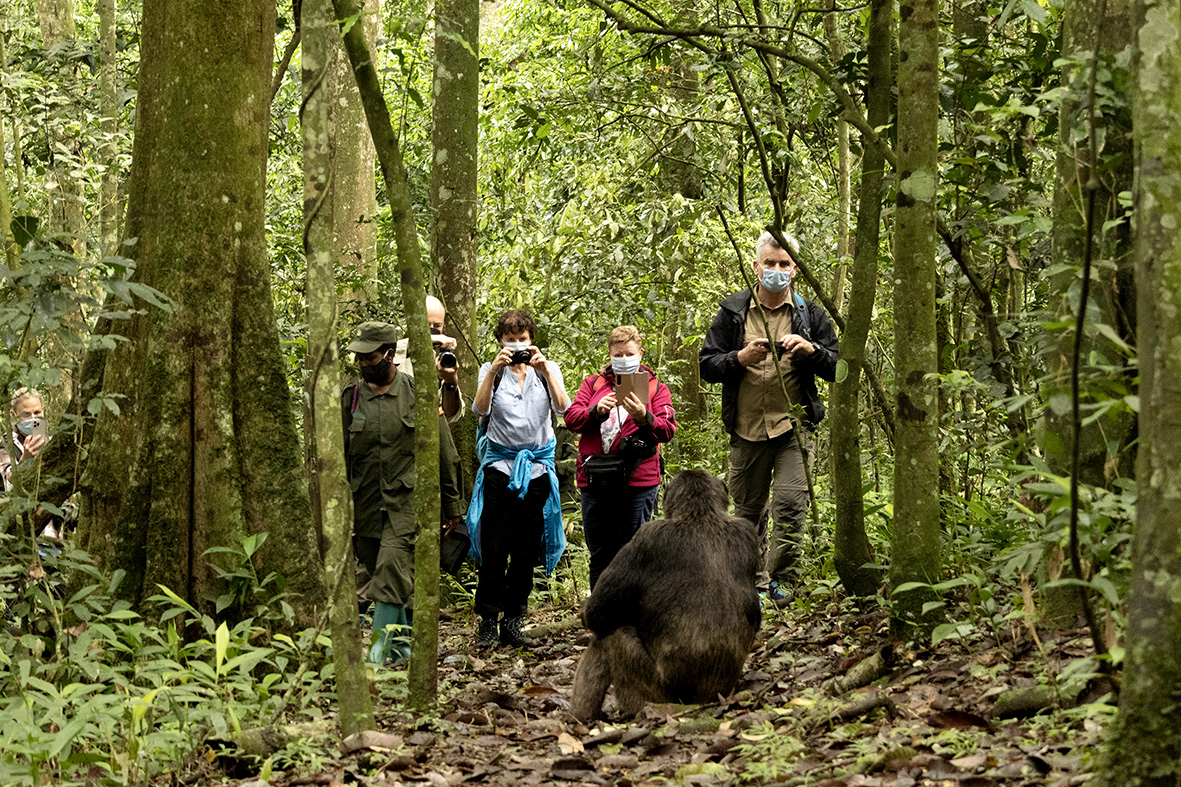
Kibale Forest offers a more structured version of forest hiking in Uganda.
Unlike Bwindi’s rugged terrain, Kibale provides smoother and more accessible walking trails. This makes it ideal for travelers seeking moderate rainforest hiking experiences.
It is also one of the best locations in Africa for chimpanzee encounters, making wildlife sightings more predictable than in many other forests.
Kibale plays an important role in Uganda forest trekking because it balances accessibility, wildlife visibility, and comfort.
Mount Elgon Forest Zone: Gradual Hiking Experience in Uganda

Mount Elgon introduces a gradual trekking system into forest hiking in Uganda.
The forest zones transition slowly from farmland into bamboo forests and then montane ecosystems. This creates a more relaxed hiking progression.
Because of this structure, Mount Elgon is ideal for beginners or travelers who prefer less demanding rainforest trekking.
It offers scenic variety without extreme physical strain, making it one of the most balanced forest hiking destinations in Uganda.
Lake Mburo Woodland Trails: Short Forest Walking Experience
Lake Mburo provides a different form of forest hiking in Uganda through woodland and savannah-edge trails.
These walks are shorter and easier, making them suitable for travelers combining hiking with safari experiences.
Although not dense rainforest, the woodland corridors still offer meaningful nature walking experiences with wildlife visibility.
This adds diversity to Uganda’s forest trekking ecosystem by offering a low-intensity option.
Difficulty Levels in Uganda Forest Hiking
Forest hiking in Uganda varies significantly depending on location.
Bwindi is the most physically demanding due to steep terrain and humidity. Kibale offers moderate difficulty with guided trails. Mount Elgon provides gradual elevation gain, while Lake Mburo remains the easiest entry point.
This variation allows travelers to select experiences based on fitness level and travel goals, improving safety and satisfaction.
Planning Your Forest Hiking Experience in Uganda
Successful planning for forest hiking in Uganda depends on three key factors.
Fitness level determines suitable terrain. Trip duration influences whether travelers choose short walks or multi-day hikes. Interest focus defines whether wildlife, scenery, or cultural immersion is the priority.
Unlike general travel guides, this structured approach improves decision-making and ensures better trekking outcomes.
Best Time for Forest Hiking in Uganda
You can enjoy forest hiking in Uganda throughout the year. However, dry seasons offer better trail conditions and improved visibility.
Wet seasons, on the other hand, make forests greener and more dramatic, which appeals to photographers and nature lovers.
The best time depends on personal travel preference rather than strict seasonal rules.
Frequently Asked Questions
What is forest hiking in Uganda?
It refers to guided trekking across Uganda’s rainforest ecosystems, including Bwindi, Kibale, Mount Elgon, and woodland areas.
Is forest hiking in Uganda beginner-friendly?
Yes. Several routes such as Kibale and Mount Elgon are suitable for beginners.
Do I need hiking experience?
No prior experience is required, but fitness improves comfort.
Is forest hiking in Uganda safe?
Yes. It is safe when guided by trained professionals.
What wildlife can I see?
Primates, birds, butterflies, and diverse forest species depending on location.
Final Thoughts
Forest hiking in Uganda continues to grow as one of Africa’s most immersive nature experiences.
From Bwindi’s dense rainforest systems to Kibale’s structured primate trails, Mount Elgon’s gradual forest transitions, and Lake Mburo’s woodland walks, Uganda offers a complete ecosystem of trekking experiences.
What makes forest hiking truly unique is its authenticity. Trails remain less commercialized, wildlife encounters feel natural, and landscapes remain largely untouched.
As a result, Uganda stands out as one of the strongest rainforest trekking destinations in Africa for 2026.
For travelers seeking real adventure contact us for a forest hiking journey that delivers a deep connection with nature and unforgettable exploration.


