

Gorilla habituation in Rushaga is widely regarded as one of the most immersive wildlife experiences available anywhere in Africa. Deep within the southern sector of Bwindi Impenetrable National Park, visitors have the rare opportunity to spend up to four hours with a mountain gorilla family that is still becoming accustomed to human presence.
Unlike traditional gorilla trekking, where visitors spend only one hour with a fully habituated gorilla group, gorilla habituation allows travelers to accompany researchers, trackers, conservationists, and wildlife rangers during the long-term process of introducing gorillas to human observers.
The experience is exclusive to Uganda and takes place only in the Rushaga sector of Bwindi. For wildlife enthusiasts, photographers, conservation-minded travelers, and safari adventurers, it represents one of the most authentic and rewarding encounters with mountain gorillas available anywhere in the world.
Understanding why Rushaga has become the center of gorilla habituation helps explain why thousands of travelers choose this remarkable corner of Uganda every year.
Understanding the Rushaga Sector of Bwindi
Rushaga is located in the southern region of Bwindi Impenetrable National Park, one of Africa’s most celebrated conservation areas.
Known for its rugged terrain, mist-covered hills, ancient rainforest, and exceptional biodiversity, Rushaga provides ideal habitat for mountain gorillas.
The sector contains one of the highest concentrations of gorilla families within Bwindi, making it particularly important for both conservation and tourism.
Unlike some areas of the park where access can be more limited, Rushaga offers a combination of excellent gorilla habitat, experienced tracking teams, and well-developed tourism infrastructure.
These advantages have helped establish the region as the primary destination for gorilla habituation in Uganda.
For visitors, the journey into Rushaga is often as memorable as the gorilla encounter itself. Rolling hills, terraced farms, forested valleys, and dramatic mountain scenery create a spectacular introduction to one of East Africa’s most extraordinary landscapes.
What Gorilla Habituation Actually Means
Before exploring the experience itself, it is important to understand what gorilla habituation involves.
Mountain gorillas are naturally wary of humans. In the wild, unfamiliar human presence can trigger caution, avoidance, or defensive behavior.
For this reason, gorilla families cannot immediately be opened to tourism.
Instead, wildlife experts spend several years gradually introducing gorillas to carefully controlled human presence.
This process is known as habituation.
Researchers and trackers follow the gorillas daily while monitoring their reactions. Over time, the gorillas learn that humans are not a threat.
The objective is not to tame the gorillas or alter their natural behavior. Rather, the goal is to allow them to remain comfortable and behave normally while being observed.
The habituation process can take several years.
During this period, selected visitors can join conservation teams and observe the process firsthand, creating the unique experience known as gorilla habituation.
Why Rushaga Is the Only Place for Gorilla Habituation
Many travelers are surprised to learn that gorilla habituation is available only in Uganda.
More specifically, the experience takes place exclusively in Rushaga.
Several factors make this area particularly suitable.
The region supports a healthy mountain gorilla population, allowing conservation authorities to carefully select families undergoing habituation.
The terrain and forest structure provide ideal conditions for tracking and monitoring gorillas.
Additionally, years of conservation investment have created strong partnerships between local communities, wildlife authorities, and tourism operators.
As a result, Rushaga has become internationally recognized as the home of gorilla habituation.
For travelers seeking this exclusive experience, there is simply no alternative destination.
The Beginning of the Gorilla Habituation Experience
The day begins early.
Visitors typically leave their lodge before sunrise and travel to the briefing point in Rushaga.
The excitement is immediately noticeable.
Many travelers have spent months or even years planning the experience.
The morning briefing introduces participants to the day’s activities, conservation guidelines, safety procedures, and expectations.
Rangers explain how to behave around gorillas, why conservation protocols are important, and what visitors may encounter during the trek.
Unlike many safari activities that follow predictable routines, gorilla habituation remains highly dynamic.
The gorillas move freely through the forest, meaning every experience unfolds differently.
This unpredictability is part of what makes the adventure so rewarding.
Tracking Gorillas Through Bwindi’s Ancient Forest
After the briefing, visitors enter the rainforest accompanied by trackers and guides.
The journey through Bwindi is an experience in itself.
Dense vegetation surrounds the trails while towering trees create a canopy overhead. Bird calls echo through the forest and sunlight filters through layers of foliage.
The environment feels untouched by time.
As visitors move deeper into the forest, trackers begin searching for signs of gorilla activity.
Fresh footprints, feeding remains, broken vegetation, and nesting sites help indicate the location of the gorilla family.
Because the gorillas roam freely, tracking can take several hours.
However, the anticipation often becomes one of the most exciting aspects of the day.
Each step deeper into the forest brings visitors closer to one of nature’s most extraordinary encounters.
The First Encounter with Mountain Gorillas
Few wildlife experiences compare to seeing a mountain gorilla for the first time.
After hours of trekking, guides often signal for silence.
Suddenly, through the vegetation, a gorilla appears.
Sometimes it is a massive silverback resting calmly beneath the forest canopy.
On other occasions, visitors first notice playful juveniles climbing through branches or mothers carrying young infants.
The moment is often emotional.
Many travelers describe feeling a mixture of excitement, respect, wonder, and humility.
The realization that these animals share nearly ninety-eight percent of their DNA with humans creates an immediate connection.
For many visitors, this first encounter becomes the defining moment of their entire safari.
Spending Four Hours with the Gorilla Family
The most distinctive feature of gorilla habituation in Rushaga is the opportunity to spend up to four hours with the gorillas.
This extended observation period transforms the experience.
During traditional gorilla trekking, visitors often focus heavily on photography because time is limited.
In contrast, four hours allows travelers to relax and truly observe.
Gradually, individual personalities begin to emerge.
Visitors notice relationships between family members, recognize behavioral patterns, and develop a deeper understanding of gorilla society.
The experience shifts from simply viewing wildlife to genuinely learning about it.
This depth of observation is one reason why many experienced safari travelers consider gorilla habituation superior to traditional trekking.
Observing Gorilla Family Life
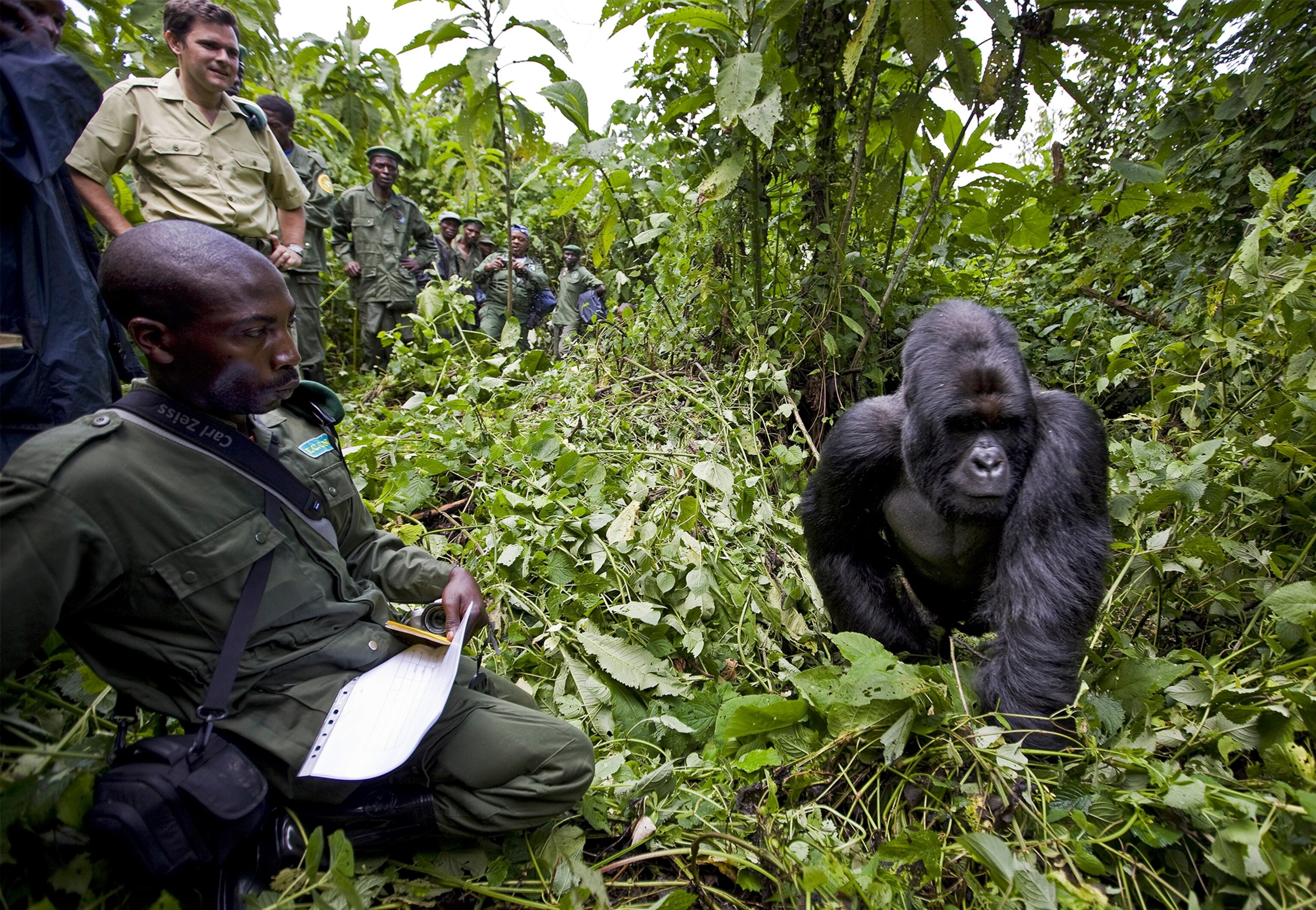
One of the greatest rewards of spending several hours with the gorillas is witnessing the complexity of family life.
The silverback leads the group and serves as protector, decision-maker, and guardian.
Adult females care for infants while maintaining social bonds with other family members.
Young gorillas spend much of their time playing, wrestling, climbing, and exploring their surroundings.
These interactions often feel surprisingly familiar.
Visitors frequently recognize behaviors that resemble human parenting, friendship, curiosity, and social development.
The similarities reinforce the close evolutionary connection between humans and gorillas.
Because visitors spend four hours with the family, they observe a much wider range of behaviors than would normally be possible during a shorter encounter.
Learning from Researchers and Conservationists
Gorilla habituation is not only a wildlife experience but also an educational one.
Throughout the day, researchers and trackers share insights into gorilla behavior, conservation efforts, family structures, and ongoing monitoring programs.
Visitors learn how individual gorillas are identified, how social groups evolve, and how conservation strategies help protect the species.
This educational component distinguishes habituation from many other wildlife activities.
Instead of simply observing animals, participants gain a deeper understanding of the scientific and conservation work occurring behind the scenes.
For travelers interested in wildlife conservation, this aspect often becomes one of the most valuable parts of the experience.
Why Gorilla Habituation in Rushaga Is Different from Gorilla Trekking
Although both experiences involve mountain gorillas, important differences exist.
Traditional gorilla trekking focuses on visiting a fully habituated family for one hour.
Gorilla habituation, however, provides up to four hours with a group still undergoing the habituation process.
Visitors become temporary participants in conservation efforts rather than simply observers.
The extended viewing time creates more opportunities for photography, learning, and behavioral observation.
Furthermore, habituation groups are generally smaller, making the experience feel more exclusive and personal.
For travelers seeking a deeper connection with mountain gorillas, habituation offers a level of immersion that standard trekking cannot match.
The Best Time for Gorilla Habituation in Rushaga
Gorilla habituation is available throughout the year.
However, seasonal conditions can influence trekking experiences.
The drier months from June to September and December to February are often considered the most comfortable periods for visiting.
During these months, trails are generally less muddy and hiking conditions are more manageable.
Photography conditions can also be favorable.
Nevertheless, the rainy seasons have their own advantages.
The forest becomes exceptionally green and atmospheric. Mist drifts through the trees, creating dramatic scenery that many photographers appreciate.
Importantly, gorilla sightings remain excellent regardless of the season.
Because the gorillas do not migrate, successful encounters occur throughout the year.
Conservation Benefits of Gorilla Habituation
The importance of gorilla habituation extends far beyond tourism.
Revenue generated through permits supports conservation initiatives throughout Bwindi.
These funds help finance ranger patrols, anti-poaching operations, veterinary interventions, habitat protection, research programs, and community development projects.
Local communities also benefit through employment opportunities and tourism-related income.
As communities experience the economic benefits of conservation, support for protecting gorillas increases.
This relationship between conservation and tourism has played a major role in the recovery of mountain gorilla populations.
Every gorilla habituation permit contributes directly to these efforts.
Planning a Gorilla Habituation Safari in Rushaga
Successful gorilla habituation experiences begin with careful planning.
Because permit availability is limited, early reservations are strongly recommended.
Demand continues to grow as more travelers discover the unique nature of the experience.
Visitors should also prepare for potentially challenging hiking conditions.
Although trekking difficulty varies depending on gorilla movements, reasonable fitness levels are beneficial.
Proper clothing, suitable hiking footwear, rain protection, and a sense of adventure all contribute to a more enjoyable experience.
Most importantly, travelers should arrive with realistic expectations and an appreciation for the conservation significance of the experience.
Why Rushaga Has Become Uganda’s Premier Gorilla Destination
Over time, Rushaga has earned a reputation as one of the most important gorilla tourism destinations in Africa.
The combination of abundant gorilla families, successful conservation programs, experienced trackers, and the exclusive habituation experience has made the region internationally recognized.
Visitors are not simply coming to see gorillas.
They are coming to participate in one of the world’s most successful wildlife conservation stories.
This deeper purpose helps distinguish Rushaga from countless other safari destinations.
Conclusion
Gorilla habituation in Rushaga offers far more than a traditional wildlife encounter.
It provides a rare opportunity to spend four hours with mountain gorillas while accompanying researchers and conservationists engaged in one of Africa’s most important conservation initiatives.
From the first steps into Bwindi’s ancient rainforest to the unforgettable moments spent observing gorilla family life, every stage of the experience creates lasting memories.
The combination of wildlife, conservation, education, adventure, and exclusivity makes gorilla habituation one of the most remarkable experiences available anywhere in the world.
For travelers seeking the ultimate gorilla safari, there is no place quite like Rushaga.
Frequently Asked Questions About Gorilla Habituation in Rushaga
What is gorilla habituation in Rushaga?
Gorilla habituation in Rushaga allows visitors to spend up to four hours with a semi-habituated mountain gorilla family while accompanying researchers, trackers, and conservation teams.
Where does gorilla habituation take place?
The experience takes place exclusively in the Rushaga sector of Bwindi Impenetrable National Park in southwestern Uganda.
How is gorilla habituation different from gorilla trekking?
Gorilla trekking involves one hour with a fully habituated gorilla family, while habituation provides four hours with a family still undergoing the habituation process.
Is gorilla habituation worth the additional cost?
Many travelers consider it worthwhile because of the extended observation time, educational value, conservation significance, and exclusive nature of the experience.
What is the best time to visit Rushaga for gorilla habituation?
The dry seasons from June to September and December to February generally offer the most comfortable trekking conditions, although gorilla sightings are excellent year-round.
How far in advance should permits be booked?
Permits should ideally be reserved several months in advance, particularly during peak travel seasons when demand is highest.


