
A Complete Travel Guide to Gorilla Trekking in Rwanda’s Virunga Rainforest
At the northern edge of Rwanda, the land rises sharply into volcanic ridges wrapped in mist. Forests cling to steep slopes, and clouds drift low across ancient peaks. This is where the Virunga landscape begins, and where one of the world’s most powerful wildlife encounters takes place.
Gorilla trekking in Rwanda happens inside a living rainforest shaped by volcanic forces. The terrain rises from fertile foothills into dense jungle, then into high-altitude bamboo forests. Every layer supports life in different ways. At the center of it all lives the endangered mountain gorilla, moving quietly through one of Africa’s most protected ecosystems.
The experience draws travelers into Volcanoes National Park, a region that protects both wildlife and landscape. Rangers guide visitors through thick vegetation, across uneven ground, and into remote gorilla territories. The journey feels physical and immediate, yet deeply connected to conservation science and ecological balance.
Unlike traditional safaris, gorilla trekking demands effort. You walk, climb, and follow trackers who read the forest in detail. When you finally meet a gorilla family, the experience feels close, quiet, and intense. Nothing separates you from the natural world except space and silence.
The Volcanic Landscape of Rwanda

The setting for gorilla trekking in Rwanda reflects millions of years of geological activity. The Virunga Mountains formed through tectonic movement along the Albertine Rift. Volcanoes pushed upward, cooled, and created fertile soil that now supports dense rainforest.
Peaks such as Mount Karisimbi and Mount Bisoke dominate the skyline. These mountains shape weather patterns and trap moisture, which feeds the forest below.
As you move upward, the vegetation changes quickly. Farmland gives way to bamboo forests, then to thick montane jungle. Higher zones grow colder and more humid. Moss covers trees, and visibility drops to just a few meters.
This environment supports mountain gorillas by offering food and protection. The forest also limits human access naturally, which helps conservation efforts. Every part of the landscape plays a role in maintaining ecological balance.
What Gorilla Trekking in Rwanda Feels Like
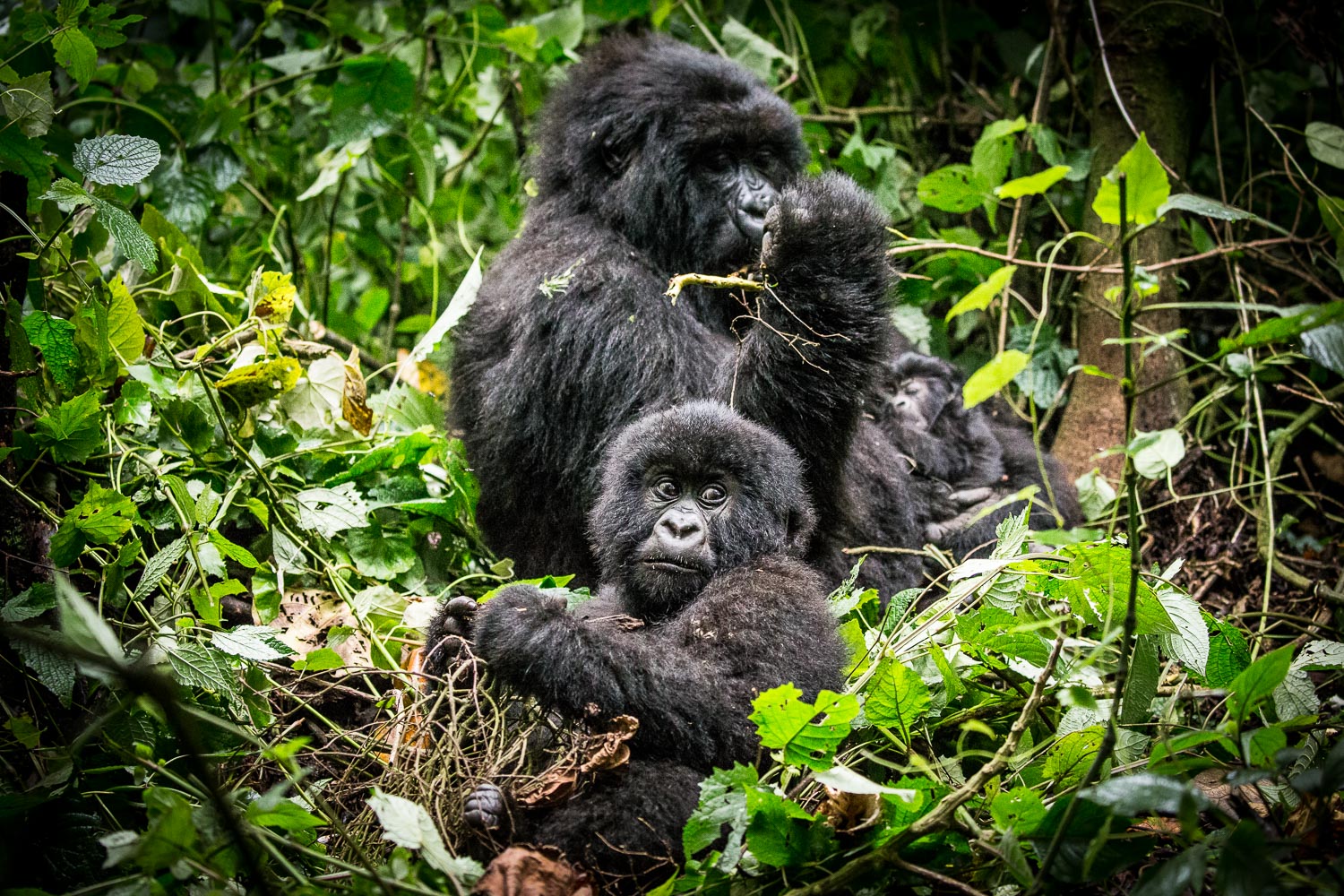
Gorilla trekking begins early in the morning. Visitors gather near Musanze, where rangers brief them about safety and forest behavior. The guides assign groups based on fitness and gorilla locations.
The trek starts immediately after the briefing. You enter the forest on narrow paths that quickly disappear into vegetation. The ground changes constantly. Some sections feel firm, while others turn soft and muddy after rainfall.
Trackers move ahead and locate gorilla families before visitors arrive. They use signs such as broken branches, footprints, and feeding traces. The forest rarely stays still, so the trek changes direction often.
As you approach the gorillas, guides slow the group. They reduce noise and tighten spacing. The forest feels quieter at this stage. Then, suddenly, movement appears in the vegetation.
A gorilla may sit against a tree. Another may feed nearby. Young gorillas often play in open patches of forest. The silverback usually stays close, observing the group with calm control.
Visitors spend one hour with the gorillas. Rangers enforce this limit strictly to protect the animals. The time passes quickly, but the experience leaves a strong impression.
Conservation and Rwanda’s Protection Model
Rwanda manages gorilla trekking through a strict conservation system. The government limits visitor numbers and controls all trekking activity inside Volcanoes National Park.
The Rwanda Development Board oversees permits and conservation programs. Revenue from trekking supports park management and local communities. This structure creates a direct link between tourism and environmental protection.
Local communities now participate in conservation. They benefit from tourism income and support anti-poaching efforts. This reduces pressure on the forest and strengthens long-term sustainability.
Rwanda’s model has helped increase mountain gorilla populations. It shows how controlled tourism can support endangered species instead of harming them.
Best Time to Go Gorilla Trekking in Rwanda
You can trek gorillas throughout the year, but conditions change with the seasons.
The dry seasons run from June to September and December to February. Trails stay firmer during these months. Walking becomes easier, and visibility improves inside the forest.
The rainy seasons bring heavier vegetation and more challenging terrain. Paths become slippery, and trekking takes more effort. However, the forest looks greener and more dramatic during this period.
Gorillas remain active all year. Weather affects comfort, not wildlife movement. Your choice depends on whether you prefer easier hiking or richer forest scenery.
Permits, Access, and Planning Your Trip
Gorilla trekking in Rwanda requires a permit for entry into Volcanoes National Park. The permit system limits visitor numbers to protect the gorillas and their habitat.
Each permit includes guided tracking and one hour with a gorilla family. The cost also supports conservation programs and local development projects.
Most travelers arrive through Kigali. From there, the journey to the park takes around two to three hours by road. The route passes through hills, villages, and agricultural landscapes that reflect Rwanda’s rural life.
You must book permits in advance because demand remains high throughout the year. Early planning ensures better availability and smoother travel arrangements.
Where to Stay Near Volcanoes National Park
Most visitors stay near Musanze, the gateway town to the park. The region offers different accommodation levels that suit various travel styles.
Luxury lodges sit on hillsides with views of the Virunga volcanoes. These properties focus on comfort, privacy, and guided experiences. They also support conservation programs through tourism partnerships.
Mid-range lodges offer comfortable rooms and easy access to the park headquarters. They provide practical convenience for early morning treks.
Smaller guesthouses create a closer connection to local life. They offer simpler facilities but provide a more personal experience of the region.
All accommodations share one advantage: proximity to the forest. You stay close to the starting point of the trek, which reduces travel time on trekking day.
Cultural Life Around the Park
The communities near Volcanoes National Park maintain strong cultural ties to the land. Farming shapes daily life, and traditions reflect long-term adaptation to volcanic terrain.
Tourism has added new layers to local culture. Many communities now participate in conservation tourism. They share crafts, music, and storytelling with visitors.
This interaction strengthens the relationship between people and the forest. It also ensures that conservation benefits extend beyond wildlife protection and into human development.
Conclusion
Gorilla trekking in Rwanda offers more than a wildlife encounter. It places you inside a complex ecosystem shaped by volcanic history, dense rainforest growth, and careful conservation planning.
Inside Volcanoes National Park, every step into the forest brings you closer to one of the world’s most endangered species. The experience feels direct and unfiltered. You do not observe gorillas from a distance. You share their space for a brief and carefully managed moment.
The journey also reflects Rwanda’s conservation success. Controlled tourism, community involvement, and strong protection policies have helped mountain gorillas recover slowly over time. Few destinations combine ecological responsibility with such powerful wildlife experiences.
When you leave the forest, you carry more than memories of close wildlife encounters. You carry an understanding of a landscape where geology, ecology, and human effort intersect. That combination makes gorilla trekking in Rwanda one of the most meaningful wildlife experiences on Earth.
FAQs
What is gorilla trekking in Rwanda?
It is a guided rainforest hike in Volcanoes National Park to observe mountain gorillas in their natural habitat.
Where does gorilla trekking take place in Rwanda?
All treks happen inside Volcanoes National Park in the northern part of the country.
How difficult is gorilla trekking in Rwanda?
The trek ranges from moderate to challenging depending on gorilla location and terrain conditions.
How much is a gorilla trekking permit in Rwanda?
A permit costs about $1,500 per person and includes park access and guiding services.
When is the best time to go gorilla trekking in Rwanda?
The dry seasons from June to September and December to February offer the easiest trekking conditions


