
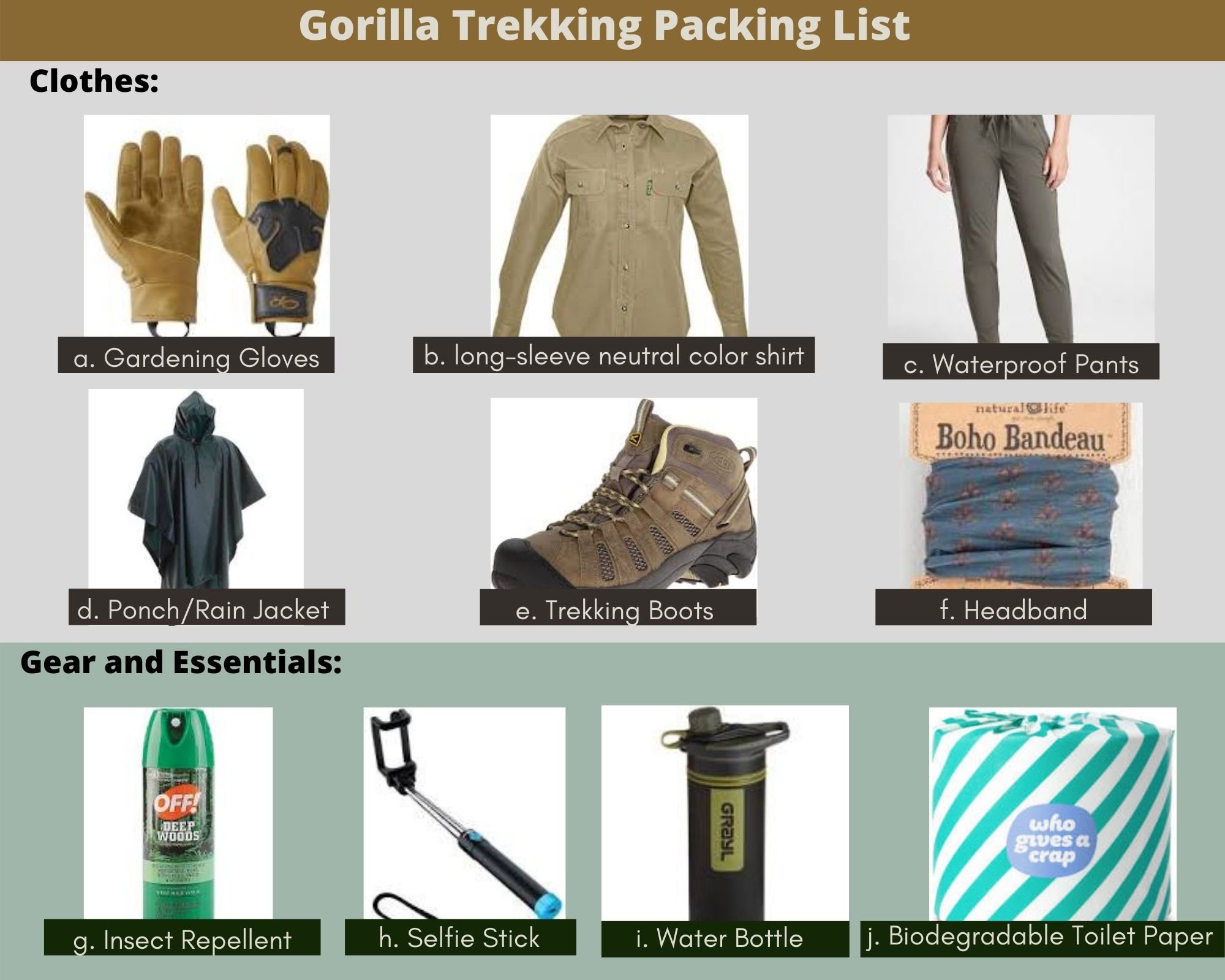
A complete gorilla trekking packing list is essential for anyone planning to visit the mountain gorillas of East AfricaGorilla trekking in Uganda takes you into steep, wet and often muddy rainforest terrain, so what you pack matters. The right hiking boots, long trousers, waterproof jacket, gloves and daypack can make a major difference to your comfort during the trek.
For travelers heading to Bwindi Impenetrable National Park or Mgahinga Gorilla National Park, this guide explains exactly what to wear, what to carry, what to leave behind and how to prepare for changing weather and challenging trails.
Why a Gorilla Trekking Packing List Is Important
Mountain gorilla habitats are located in tropical rainforests at high altitudes. Conditions change rapidly throughout the day. A sunny morning can quickly become cold and rainy. Trails are often slippery and overgrown, while trekking times range from one hour to over eight hours depending on the gorilla family location.
Packing incorrectly can lead to discomfort, fatigue, and unnecessary stress during the trek. The right clothing and equipment help protect you from mud, rain, insects, thorny vegetation, and changing temperatures. More importantly, proper preparation allows you to focus on the incredible wildlife encounter instead of worrying about wet shoes or missing essentials.
Choosing the Right Clothing for Gorilla Trekking

Clothing plays the biggest role in determining your comfort during the trek. Gorilla trekking is not a fashion event. Functionality matters more than appearance.
Lightweight, breathable, and moisture-wicking clothing is ideal because the trek can become physically intense. Long-sleeved shirts and long trousers are strongly recommended to protect your skin from stinging nettles, insects, and sharp branches.
Neutral-colored clothing works best in the forest. Shades such as green, brown, khaki, and gray blend naturally into the environment and are less disturbing to wildlife. Bright colors can attract insects and distract animals.
Layering is essential because temperatures vary significantly between early morning and midday. Start with a moisture-wicking base layer, add a lightweight fleece for warmth, and carry a waterproof outer layer for rain protection.
Cotton clothing should generally be avoided because it absorbs moisture and dries slowly. Synthetic trekking fabrics perform much better in humid rainforest conditions.
Waterproof Hiking Boots Are Non-Negotiable
One of the biggest mistakes travelers make is bringing ordinary sneakers instead of proper hiking boots. Gorilla trekking trails are frequently muddy, steep, and slippery. In some sections, trekkers walk through streams or thick wet vegetation.
Waterproof hiking boots with strong ankle support provide stability and reduce the risk of injuries. Boots with aggressive grip soles help you maintain traction on uneven terrain.
It is equally important to break in your boots before the trek. New boots can cause painful blisters that may ruin the experience. Wear them several times before traveling to East Africa.
Thick hiking socks also make a significant difference. Moisture-wicking socks reduce friction and keep your feet comfortable during long walks.
Why Gaiters Are Highly Recommended
Many experienced trekkers consider gaiters one of the most underrated items on a gorilla trekking packing list. Gaiters cover the gap between your trousers and boots, preventing mud, water, insects, and small plants from entering your shoes.
Since gorilla trekking often involves walking through muddy paths and dense vegetation, gaiters help keep your lower legs clean and dry. They are especially useful during the rainy season in Uganda and Rwanda.
Rain Gear Is Essential Year-Round
Rain is common in mountain gorilla habitats regardless of the season. Even during relatively dry months, sudden showers can occur without warning.
A lightweight waterproof rain jacket is one of the most important items to pack. Choose one with a hood and breathable fabric to prevent overheating during the hike.
A compact rain poncho can also be useful for covering both your body and backpack during heavy rainfall. Waterproof backpack covers provide additional protection for electronics, cameras, and personal belongings.
Quick-drying clothing becomes extremely valuable after a rain shower because wet cotton garments can remain uncomfortable for hours.
Best Gloves for Gorilla Trekking Adventures
Many gorilla trekking routes involve grabbing branches and vegetation while climbing steep hills. Gardening gloves or lightweight trekking gloves protect your hands from thorns, rough plants, and insects.
Gloves are particularly useful in Bwindi Impenetrable National Park, where dense vegetation often surrounds trekking paths. Simple gloves can greatly improve comfort and confidence while navigating the forest.
A Comfortable Backpack Makes a Big Difference
A small daypack is ideal for carrying essentials during the trek. Your backpack should be lightweight, waterproof, and comfortable enough to wear for several hours.
Choose a bag with padded shoulder straps and enough space for water, snacks, rain gear, sunscreen, insect repellent, and camera equipment. Around 20 to 30 liters is usually sufficient.
Heavy luggage should be left at your lodge or hotel. During the trek, mobility and comfort are more important than carrying unnecessary items.
Hydration Is Critical During Gorilla Trekking

Many people underestimate how physically demanding gorilla trekking can be. High altitude combined with steep terrain can quickly lead to dehydration.
Carry at least two liters of drinking water per person. Reusable water bottles or hydration packs work well for long treks.
Electrolyte tablets or hydration powders can also help maintain energy levels during strenuous hikes. Staying hydrated improves endurance and helps prevent fatigue.
Energy Snacks to Include in Your Gorilla Trekking Packing List
Gorilla trekking often starts early in the morning and can continue for several hours before locating a gorilla family. Energy-rich snacks are extremely useful during the hike.
Protein bars, nuts, dried fruits, bananas, and trail mix provide quick energy without adding excessive weight to your backpack.
Some lodges provide packed lunches for longer treks, especially in Uganda’s Bwindi region where trekking durations can vary widely.
The Importance of Insect Protection
Rainforests naturally contain mosquitoes and other insects. Although gorilla trekking areas are generally cooler at higher elevations, insect protection is still important.
A strong insect repellent containing DEET or picaridin helps reduce bites. Applying repellent to clothing and exposed skin before entering the forest is recommended.
Long sleeves and long trousers provide additional protection. Some travelers also prefer treating clothing with permethrin for extra defense against insects.
Sunscreen and Sunglasses Are Often Overlooked
Many travelers assume rainforest environments eliminate sun exposure. However, ultraviolet rays remain strong at high elevations, particularly during open trail sections.
A broad-spectrum sunscreen protects exposed skin, while sunglasses help reduce glare during sunny moments outside dense forest cover.
A hat with a brim also provides useful protection against both sun and light rain.
Trekking Poles Improve Stability
Trekking poles are extremely helpful on steep and slippery trails. They reduce strain on knees and improve balance during muddy descents.
While some lodges and parks rent walking sticks locally, many experienced hikers prefer bringing adjustable trekking poles for better support.
Poles are especially valuable for older travelers or anyone concerned about stability on uneven terrain.
Camera Equipment for Gorilla Trekking
Seeing mountain gorillas in the wild is a once-in-a-lifetime experience, and most travelers want quality photographs. However, rainforest photography can be challenging because of low light conditions under dense canopy cover.
A camera with good low-light performance is ideal. Fast lenses and image stabilization can help capture clear photos without flash, which is prohibited during gorilla encounters.
Extra batteries are highly recommended because cold temperatures and long trekking hours drain battery life faster than expected.
Waterproof protection for cameras is equally important due to unpredictable rain.
Why Flash Photography Is Not Allowed
Mountain gorillas are sensitive animals, and conservation rules prioritize their wellbeing. Flash photography can disturb or stress gorillas, especially infants.
Park authorities strictly prohibit flash usage during trekking sessions. Travelers should learn how to adjust camera settings beforehand to perform well in natural lighting conditions.
Travel Documents and Permits
Gorilla trekking permits are among the most valuable wildlife permits in Africa, and you must carry proper documentation on trekking day.
Keep your passport, permit confirmation, and travel insurance information in a waterproof pouch or dry bag.
Many travelers also carry photocopies or digital backups stored securely on their phones.
Health and Medical Essentials
A small personal medical kit is extremely useful during gorilla trekking. Include pain relievers, blister treatment, bandages, antiseptic wipes, and any prescription medication you may need.
Altitude and physical exertion can affect some travelers differently, so it is wise to bring medications you commonly use at home.
Hand sanitizer and wet wipes are also practical because restroom access in the forest is limited.
Travel insurance covering medical emergencies and evacuation is strongly recommended for all gorilla trekking trips.
Packing for Uganda vs Rwanda Gorilla Trekking
Although packing requirements are generally similar, there are small differences between destinations.
Uganda treks, especially in Bwindi, are often steeper and more physically demanding because of the park’s rugged terrain. Waterproof gear and strong hiking boots become even more important here.
Rwanda trekking in Volcanoes National Park can involve shorter driving times from the capital city, but weather conditions remain highly unpredictable.
Democratic Republic of the Congo offers adventurous trekking experiences in Virunga, though travelers should always check the latest travel advisories and park operations before visiting.
The Best Time for Gorilla Trekking
Packing needs can vary slightly depending on the season. The dry seasons from June to September and December to February are generally considered the best times for gorilla trekking.
Trails are less muddy during these periods, making hiking easier. However, rain remains possible year-round because these parks are tropical rainforests.
During wet seasons, waterproof gear becomes even more critical. Extra socks, gaiters, and rain protection significantly improve comfort.
What You Should Not Pack
Overpacking is a common mistake. Heavy bags become exhausting during long hikes, especially at high altitude.
Avoid unnecessary electronics, excessive clothing, valuable jewelry, and oversized luggage on trekking day. Large suitcases are impractical in many safari lodges and remote camps.
Plastic bags are banned in some East African countries, including Rwanda, so reusable packing cubes and waterproof dry bags are better alternatives.
Hiring a Porter Is Worth Considering
Many first-time trekkers hesitate to hire a porter, but doing so can greatly improve the experience. Porters help carry backpacks and provide physical assistance on difficult sections of the trail.
Beyond convenience, hiring a porter directly supports local communities surrounding gorilla parks. The income helps create sustainable livelihoods connected to conservation tourism.
Even physically fit travelers often appreciate the extra support during challenging treks.
Mental Preparation Is Just as Important
Gorilla trekking is unpredictable. Some groups find gorillas within an hour, while others hike deep into the forest for most of the day.
Approaching the experience with patience and flexibility makes a huge difference. The reward of observing mountain gorillas in their natural habitat far outweighs the physical challenge.
The final moments spent quietly watching a gorilla family are emotional, humbling, and unforgettable.
Conclusion
Planning a gorilla trekking adventure in Uganda?
Ababa Uganda Safaris can help arrange your gorilla permit, accommodation, 4×4 safari vehicle, experienced guide and trekking logistics around Bwindi or Mgahinga. We tailor each itinerary to your travel dates, fitness level, budget and wider Uganda safari interests.


