
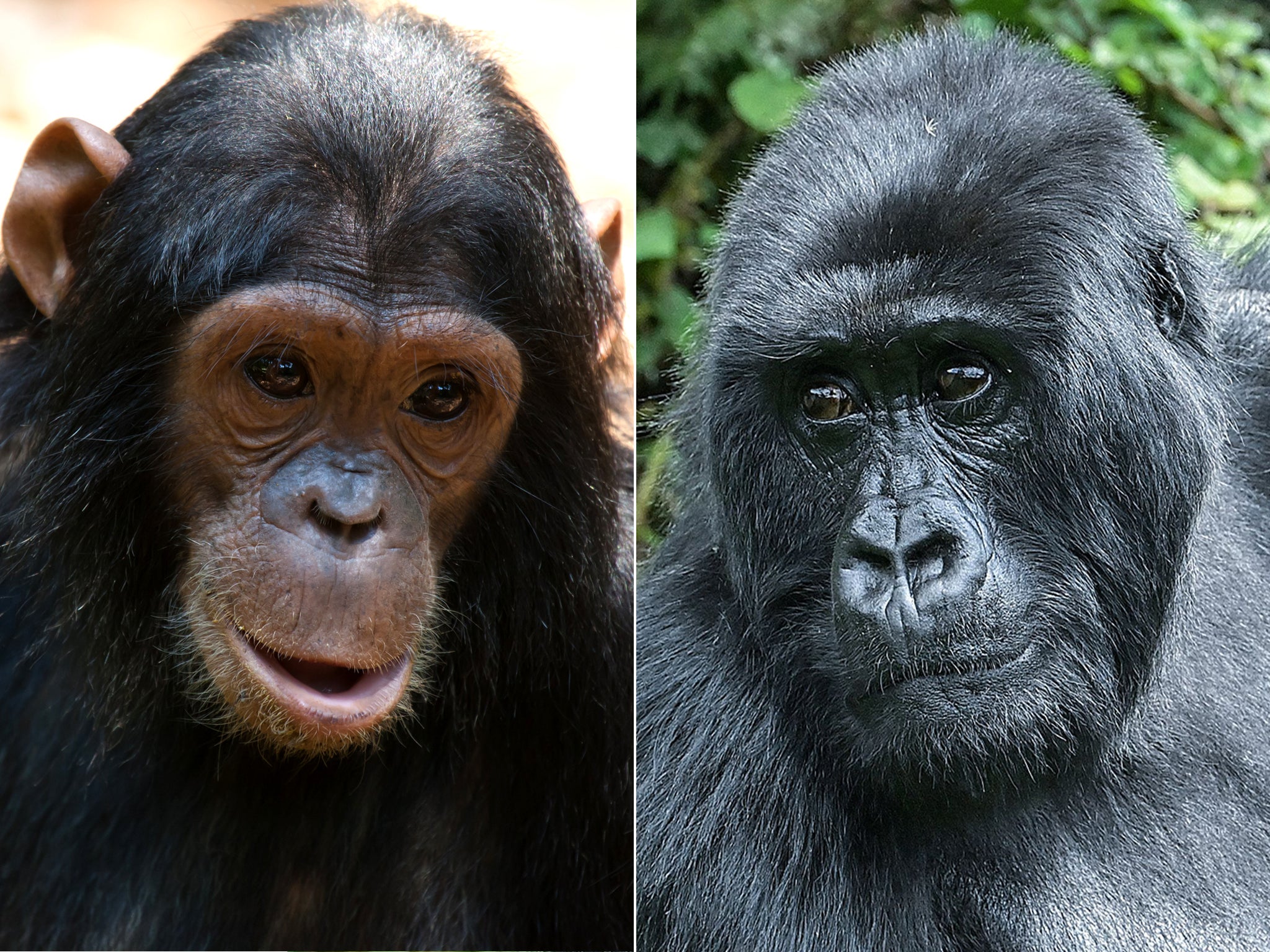
Which Wildlife Experience Is Better?
Gorilla trekking vs chimpanzee trekking is one of the most common comparisons travelers make when planning a primate safari in East Africa. Both experiences offer extraordinary opportunities to encounter our closest relatives in the wild. However, despite sharing similarities, gorilla trekking and chimpanzee trekking provide very different wildlife encounters, trekking experiences, costs, and safari expectations.
For many travelers visiting Uganda, Rwanda, or other primate destinations in Africa, choosing between gorilla trekking and chimpanzee trekking can be challenging. Some visitors have limited time or budget and must decide which experience to prioritize. Others want to understand the differences before investing in permits and safari packages.
Both activities contribute significantly to wildlife conservation and provide unforgettable moments in natural forest environments. Nevertheless, mountain gorillas and chimpanzees behave differently, live in different habitats, and create distinct visitor experiences.
Having planned and observed countless primate safaris across East Africa, one thing remains clear. Neither experience is objectively better than the other. Instead, the right choice depends on your travel goals, budget, fitness level, and expectations.
This comprehensive Gorilla Trekking vs Chimpanzee Trekking guide compares costs, trekking parks, wildlife encounters, conservation impact, photography opportunities, difficulty levels, and overall safari value to help you decide which primate adventure is best for you.
Quick Answer: Gorilla Trekking vs Chimpanzee Trekking
If your goal is a once-in-a-lifetime wildlife encounter with one of the world’s rarest primates, gorilla trekking is often the preferred choice.
If you enjoy active wildlife viewing, fascinating animal behavior, and a more affordable experience, chimpanzee trekking can be equally rewarding.
Many travelers ultimately choose both experiences because each offers something completely unique.
Understanding Gorilla Trekking and Chimpanzee Trekking
Although both activities involve tracking primates through forests, the experience differs significantly.
Gorilla trekking focuses on finding habituated mountain gorilla families living within protected forests. Once located, visitors spend one hour observing the gorillas as they feed, rest, groom, and interact with family members.
Chimpanzee trekking involves searching for habituated chimpanzee communities that move actively through forest environments. Unlike gorillas, chimpanzees spend much of their time climbing, running, vocalizing, and interacting dynamically with one another.
As a result, gorilla trekking often feels calm and intimate, while chimpanzee trekking feels energetic and unpredictable.
Gorilla Trekking vs Chimpanzee Trekking: Key Differences at a Glance
| Factor | Gorilla Trekking | Chimpanzee Trekking |
|---|---|---|
| Main Species | Mountain Gorillas | Chimpanzees |
| Viewing Time | 1 Hour | 1 Hour |
| Permit Cost | Higher | Lower |
| Trek Difficulty | Moderate to Challenging | Easy to Moderate |
| Photography | Easier | More Challenging |
| Wildlife Behavior | Calm and relaxed | Active and energetic |
| Population Size | Smaller | Larger |
| Conservation Status | Endangered | Endangered |
| Safari Prestige | Very High | High |
Both experiences are exceptional, but they appeal to different traveler preferences.
Best Destinations for Gorilla Trekking
Mountain gorillas exist in only a few locations worldwide.
Uganda is the leading destination for gorilla trekking and hosts nearly half of the world’s remaining mountain gorillas.
The primary trekking destinations include Bwindi Impenetrable National Park and Mgahinga Gorilla National Park.
Rwanda also offers world-class gorilla trekking in Volcanoes National Park.
These destinations provide professionally guided treks and highly successful gorilla encounters throughout the year.
The rarity of mountain gorillas contributes significantly to the prestige of gorilla trekking.
Best Destinations for Chimpanzee Trekking

Chimpanzees inhabit a wider range of forests across Africa.
Uganda remains one of the best destinations for chimpanzee trekking due to its large populations and well-managed tourism programs.
Kibale National Park is widely regarded as the best chimpanzee trekking destination in East Africa. The park supports one of Africa’s highest concentrations of chimpanzees and offers excellent tracking success rates.
Additional chimpanzee trekking opportunities exist in Budongo Forest, Kyambura Gorge, and Kalinzu Forest.
Rwanda’s Nyungwe Forest National Park also provides outstanding chimpanzee tracking experiences.
Gorilla Trekking vs Chimpanzee Trekking Costs
Cost is often one of the biggest deciding factors.
Gorilla permits are significantly more expensive because mountain gorillas are rarer, tourism numbers are tightly controlled, and conservation costs are substantial.
Chimpanzee permits are generally more affordable.
Permit Cost Comparison
| Destination | Gorilla Permit | Chimpanzee Permit |
| Uganda | $800 | $250 |
| Rwanda | $1,500 | $150 |
| Habituation Experience | $1,500 | $300+ |
The difference in permit prices means travelers can often complete multiple chimpanzee treks for the cost of a single gorilla permit.
Overall Safari Cost Comparison
The total safari budget includes permits, accommodation, transportation, meals, and guide services.
Safari Cost Comparison
| Safari Type | Gorilla Safari | Chimpanzee Safari |
| Budget | $900–$1,800 | $400–$900 |
| Mid-Range | $1,800–$3,500 | $900–$2,000 |
| Luxury | $3,500–$8,000+ | $2,000–$5,000+ |
Chimpanzee trekking generally offers a more affordable wildlife experience.
However, many travelers consider gorilla trekking worth the additional investment because of its rarity and emotional impact.
Trekking Difficulty Comparison
One of the most frequently asked questions involves trekking difficulty.
Gorilla trekking often requires navigating steep terrain, dense vegetation, and mountainous forests. Trek durations vary significantly depending on the location of the gorilla family.
Some treks last one hour, while others may require several hours of hiking.
Chimpanzee trekking tends to involve less physically demanding terrain. However, chimpanzees move quickly and can cover considerable distances through the forest.
Consequently, gorilla trekking often feels more physically challenging, while chimpanzee trekking requires greater mobility and responsiveness.
Wildlife Viewing Experience
The actual wildlife encounter differs dramatically between the two species.
Mountain gorillas spend much of their time on the ground. Visitors can observe family interactions from relatively close distances.
Watching a dominant silverback, playful juveniles, and attentive mothers creates an emotional connection that many travelers find unforgettable.
Chimpanzees present a more dynamic spectacle.
They communicate through loud vocalizations, move rapidly through trees, and display highly social behavior.
Their intelligence and human-like actions fascinate visitors, but photography and observation can be more challenging due to their movement.
Photography: Gorilla Trekking vs Chimpanzee Trekking
Photography enthusiasts often ask which experience offers better opportunities.
Gorilla trekking generally provides superior photography conditions.
Because gorillas move slowly and frequently remain in open areas, photographers have more time to compose shots and capture expressions.
Chimpanzees spend much of their time in trees and move quickly between locations.
As a result, photographers often require faster shutter speeds and greater patience.
For wildlife photography, gorilla trekking usually has the advantage.
Conservation Impact
Both activities support conservation initiatives that protect endangered primates and their habitats.
Tourism revenue funds ranger patrols, anti-poaching operations, research programs, habitat protection, and community development projects.
The success of gorilla conservation is particularly remarkable. Mountain gorilla populations have increased over recent decades due to collaborative conservation efforts.
Chimpanzee conservation programs also rely heavily on sustainable tourism to protect forest ecosystems and wildlife populations.
Choosing either experience contributes directly to conservation success.
Gorilla Trekking vs Chimpanzee Trekking for First-Time Safari Travelers
For many first-time visitors to Africa, gorilla trekking becomes the ultimate wildlife goal.
The rarity of mountain gorillas and the intimacy of the encounter create a unique emotional experience.
However, chimpanzee trekking often surprises visitors with its energy, excitement, and affordability.
Many travelers who initially focus only on gorillas later discover that chimpanzee trekking becomes one of the highlights of their safari.
For first-time safari travelers with sufficient time, combining both experiences provides the most complete primate adventure.
Combining Gorilla Trekking and Chimpanzee Trekking
Uganda offers one of the world’s best opportunities to combine both experiences within a single itinerary.
Travelers can trek chimpanzees in Kibale National Park before continuing to Bwindi Impenetrable National Park for gorilla trekking.
This combination provides an extraordinary opportunity to compare two of humanity’s closest relatives in their natural environments.
Many safari experts consider this combination one of Africa’s finest wildlife experiences.
Our Expert Perspective
After years of organizing primate safaris throughout East Africa, one consistent observation stands out.
Travelers rarely regret investing in gorilla trekking. The encounter often exceeds expectations and remains a lifelong memory.
At the same time, chimpanzee trekking frequently becomes an unexpected favorite because of the animals’ intelligence, vocal communication, and energetic behavior.
Rather than viewing the two experiences as competitors, we often recommend seeing them as complementary wildlife encounters.
Together, they provide a deeper understanding of Africa’s remarkable primate diversity.
Which Safari Offers Better Value?
Value depends entirely on personal priorities.
Travelers seeking a bucket-list wildlife encounter often find gorilla trekking provides unmatched value despite the higher cost.
Visitors seeking multiple wildlife experiences within a limited budget may find chimpanzee trekking offers greater affordability and flexibility.
Both experiences deliver exceptional returns in terms of conservation impact, wildlife encounters, and travel memories.
Final Verdict: Gorilla Trekking vs Chimpanzee Trekking
The Gorilla Trekking vs Chimpanzee Trekking debate has no universal winner.
Gorilla trekking delivers one of the world’s most exclusive wildlife experiences and provides unparalleled emotional connections with mountain gorillas.
Chimpanzee trekking offers dynamic wildlife encounters, fascinating behavior, and excellent value for money.
If budget allows, combining both experiences creates the ultimate primate safari.
However, if you must choose one, your decision should depend on whether you value rarity and intimacy or activity and affordability.
Either way, you will experience some of Africa’s most extraordinary wildlife encounters.
Frequently Asked Questions
Is gorilla trekking better than chimpanzee trekking?
Gorilla trekking is often considered more exclusive because mountain gorillas are rarer. However, chimpanzee trekking offers equally fascinating wildlife encounters and costs significantly less.
Which is more expensive, gorilla trekking or chimpanzee trekking?
Gorilla trekking is substantially more expensive due to higher permit fees and conservation costs. Chimpanzee trekking is generally more affordable.
Which trek is more difficult?
Gorilla trekking is often more physically demanding because of mountainous terrain and dense forests. Chimpanzee trekking usually involves easier terrain but requires following faster-moving animals.
Can I combine gorilla trekking and chimpanzee trekking in one safari?
Yes. Uganda is one of the best destinations for combining both experiences, particularly through itineraries that include Kibale National Park and Bwindi Impenetrable National Park.


