
How to Prepare for Gorilla Trekking in Uganda or Rwanda – Gorilla trekking is one of the most extraordinary wildlife experiences in the world. Standing a few meters away from a family of endangered mountain gorillas in their natural forest habitat is both humbling and unforgettable. The dense rainforests of Bwindi Impenetrable National Park and Volcanoes National Park offer travelers the rare opportunity to observe these gentle giants in the wild while supporting vital conservation efforts.
While the encounter itself lasts only about one hour, preparing properly for the trek can make a huge difference in how comfortable and rewarding the experience becomes. Gorilla trekking involves hiking through thick forests, climbing steep slopes, and adapting to changing weather conditions. Proper preparation ensures that visitors can fully enjoy the moment when they finally come face to face with a gorilla family.
This guide explains how to prepare for gorilla trekking in Uganda or Rwanda, from understanding physical demands to choosing the right gear and mindset for this once-in-a-lifetime adventure.
Understanding the Gorilla Trekking Experience
Before preparing for gorilla trekking, it is important to understand how the experience works. Trekking begins early in the morning with a briefing at the park headquarters. Visitors are divided into small groups and assigned a gorilla family that has been habituated to human presence. These families are carefully monitored and protected by park rangers.
In Uganda, most trekking takes place in Bwindi Impenetrable National Park, a UNESCO World Heritage Site known for its dense jungle terrain and incredible biodiversity. Rwanda’s treks occur in Volcanoes National Park, located in the Virunga mountain range and famous for its misty volcanic landscapes.
Once the briefing is complete, trekkers set off with experienced guides and trackers who follow signs such as broken vegetation, nests, and fresh footprints to locate the gorillas. The trek can last anywhere from one to six hours depending on where the gorilla family is located that day. When the gorillas are found, visitors are allowed exactly one hour to observe them from a safe distance.
Because the trek takes place in mountainous rainforest terrain, preparation is essential to ensure comfort, safety, and enjoyment.
Physical Preparation for the Trek
Gorilla trekking is not considered extreme hiking, but it does require a reasonable level of physical fitness. The forests where gorillas live are steep, humid, and often muddy. Visitors may need to hike uphill, cross streams, push through thick vegetation, and walk for several hours.
Preparing your body before the trip can make the experience much more enjoyable. Simple activities such as regular walking, hiking, or light cardio workouts a few weeks before travel can help build stamina. If possible, practice walking on uneven terrain or hills to simulate the trekking conditions.
Altitude can also play a role. Gorilla trekking areas are typically between 2,000 and 3,000 meters above sea level. Travelers who are not used to high elevations may feel slightly breathless during steep climbs. Moving at a steady pace and staying hydrated helps the body adjust naturally.
Even visitors who are not very athletic can complete the trek. Guides move at a pace that suits the group, and porters are available to assist with carrying bags or providing support on difficult sections of the trail.
Securing Gorilla Trekking Permits in Advance
One of the most important preparations for gorilla trekking is securing the required permit. Both Uganda and Rwanda strictly control the number of visitors allowed to see gorillas each day in order to protect the animals and their habitat.
Permits are issued by national park authorities and should be booked several months in advance, especially during peak travel seasons. In Uganda, permits are managed through the Uganda Wildlife Authority, while in Rwanda they are issued by the Rwanda Development Board.
Each permit allows a visitor to spend one hour with a specific gorilla family accompanied by trained guides and rangers. Because availability is limited, many travelers secure permits through experienced safari operators who organize the entire trekking itinerary, including accommodation and transport.
Planning early not only guarantees a permit but also allows visitors to choose the trekking sector that best matches their preferences or physical ability.
Choosing the Right Clothing for the Jungle
The rainforests where mountain gorillas live are cool, wet, and densely vegetated. Wearing the right clothing can make trekking far more comfortable and protect visitors from scratches, insects, and changing weather conditions.
Long-sleeved shirts and long trousers are essential because the trails often pass through thick undergrowth. These layers protect against thorny plants and insects while also keeping the body warm in the cool mountain climate.
Neutral-colored clothing such as green, brown, or khaki is recommended because it blends naturally into the forest environment. Bright colors may disturb wildlife or attract unnecessary attention from insects.
Waterproof jackets are also highly recommended since rain showers can occur unexpectedly in tropical forests. Even during the dry season, the weather in mountain forests can change quickly.
Good quality hiking socks help prevent blisters and provide comfort during long treks. Many experienced trekkers also tuck their trousers into their socks to prevent ants and other insects from crawling up their legs.
Footwear That Can Handle Forest Terrain

Perhaps the most important gear item for gorilla trekking is sturdy hiking boots. Trails in the rainforest can be slippery due to mud, wet leaves, and steep slopes. Proper boots with good grip help trekkers maintain balance and prevent accidents.
Water-resistant boots are ideal because they keep feet dry when crossing streams or walking through damp vegetation. The boots should also provide strong ankle support since the terrain can be uneven.
Break in hiking boots are recommended before the trek rather than wearing brand-new footwear. This helps avoid blisters and discomfort during the hike.
Gaiters are another useful addition for many trekkers. These cover the lower legs and prevent mud, water, and insects from entering the boots.
Packing Essential Gear for the Trek
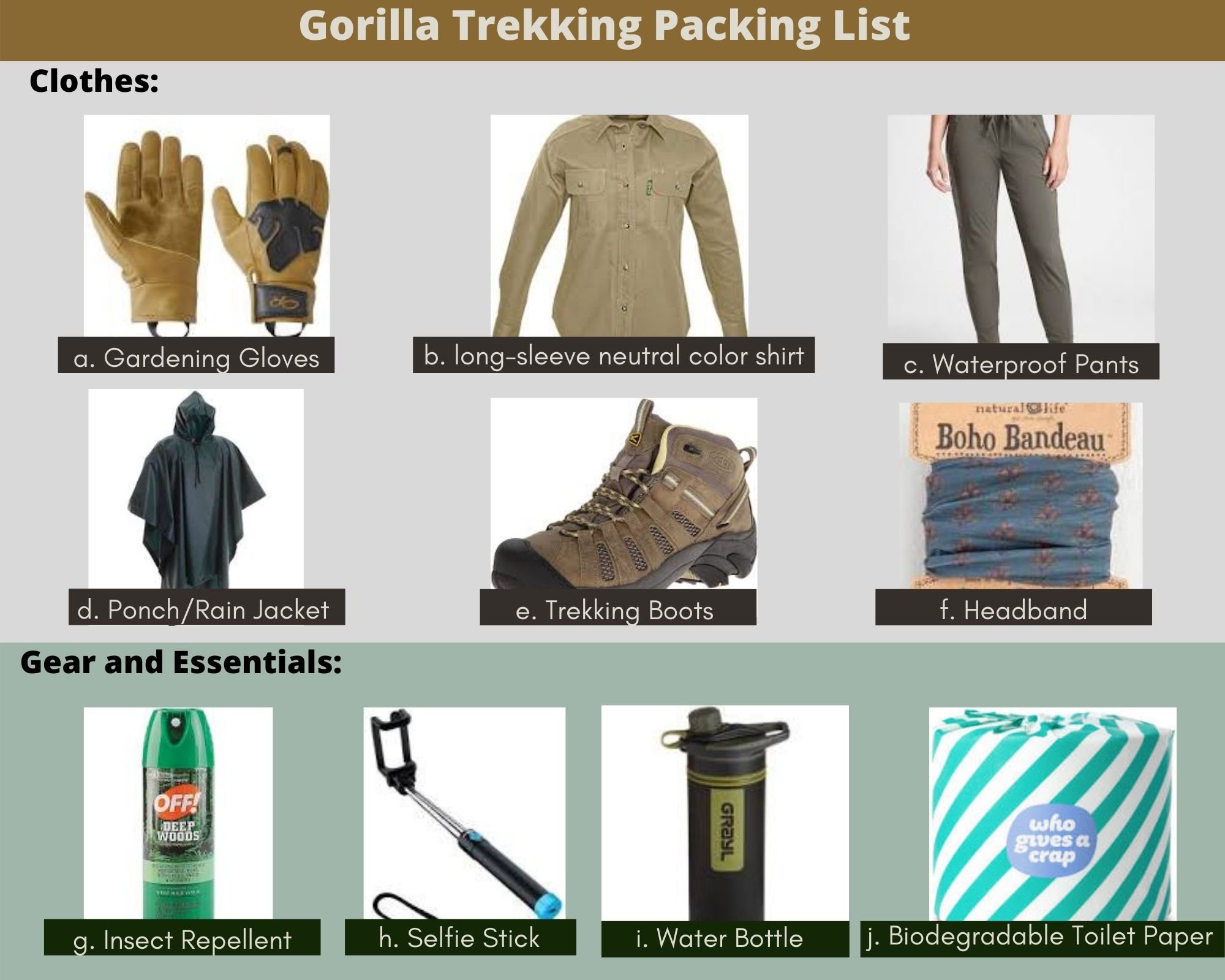
While the trek itself is guided and well organized, bringing a few essential items can greatly improve the experience.
A small backpack is useful for carrying water, snacks, a rain jacket, and personal items. Staying hydrated during the trek is important because the humid environment can quickly lead to dehydration.
A camera with a good zoom lens allows visitors to capture incredible moments with the gorillas. Flash photography is not allowed because it can startle the animals, so cameras should be set to natural lighting modes.
Sunscreen and insect repellent are also recommended. Although the forest canopy provides shade, sunlight can still be strong at high altitudes.
Many travelers also bring gardening gloves or lightweight trekking gloves. These can be surprisingly helpful when grabbing branches or vines while climbing steep sections of the trail.
Hiring a Porter for Assistance
Hiring a porter during gorilla trekking is recommended, even for physically fit travelers. Local community members work as trained porters and help visitors carry backpacks, navigate challenging trails, and manage steep sections of the trek.
In addition, hiring a porter supports the communities that live near the national parks. The fees provide an important source of income, create alternative livelihood opportunities, and encourage local residents to protect mountain gorillas and their forest habitats.
Porters know the terrain well and guide trekkers through difficult parts of the trail with confidence. Their support makes the hike more comfortable and enjoyable, allowing visitors to focus on the beauty of the forest and the excitement of encountering gorillas in their natural environment.
Understanding Gorilla Trekking Etiquette
Meeting wild mountain gorillas is an incredibly special privilege, and visitors must follow strict guidelines to protect both themselves and the animals.
Trekkers must maintain a safe distance of at least seven meters from the gorillas. Although gorillas are generally calm and peaceful, they are still wild animals and should never feel threatened.
Visitors should speak quietly and avoid sudden movements. Loud noises or aggressive gestures can disturb the gorillas and disrupt their natural behavior.
Flash Photography must be turned off. The goal is to observe and appreciate the gorillas while minimizing human impact on their environment.
Guides and rangers closely monitor the group throughout the encounter to ensure that both visitors and gorillas remain safe and comfortable.
Preparing Mentally for a Unique Wildlife Encounter

Beyond physical preparation, mental readiness plays an important role in enjoying gorilla trekking. The hike can be challenging, and conditions in the forest are unpredictable. Some treks are short and easy, while others may take several hours through steep terrain.
Patience is key. The trackers work tirelessly to locate the gorillas, but the animals move freely through the forest. The reward for the effort is a truly remarkable moment when the gorillas finally appear through the dense foliage.
Watching a silverback calmly observe his family, seeing young gorillas play, or locking eyes with one of these intelligent primates can be a deeply emotional experience. Many travelers describe it as one of the most powerful wildlife encounters of their lives.
Approaching the trek with curiosity, respect, and appreciation for nature makes the experience far more meaningful.
Why Preparation Makes the Experience Better
Proper preparation transforms gorilla trekking from a challenging hike into a comfortable and rewarding adventure. Being physically ready, wearing the right clothing, and bringing essential gear ensures that visitors can focus on the incredible surroundings rather than discomfort.
Equally important is understanding the conservation efforts that protect mountain gorillas. Tourism revenue from trekking permits plays a major role in preserving their habitat and supporting local communities. Every visitor who prepares responsibly contributes to the long-term survival of these magnificent animals.
For travelers seeking a truly unforgettable wildlife experience, few adventures compare to trekking through the misty forests of Uganda or Rwanda and standing face to face with a family of mountain gorillas. With the right preparation, the journey becomes not only achievable but deeply inspiring.


