
A Vast Wilderness Few Truly Know
At over 4,000 square kilometers, Mount Elgon stands among the largest extinct volcanoes in the world. Its immense, ancient landscape rivals Africa’s most celebrated natural wonders. Yet few travelers venture here. The mountain’s vast caldera, mist-covered forests, and waterfalls remain largely unexplored.
Those who do make the journey discover something rare. Mt. Elgon offers a wilderness that feels personal and unhurried. It invites you to slow down and connect deeply with nature. In a world where many safari destinations pulse with activity, this mountain moves to a quieter rhythm one defined by footsteps, shifting light, and the gradual unfolding of terrain.
Uganda often draws attention for dramatic wildlife encounters. Travelers flock to Murchison Falls National Park or trek gorillas in Bwindi Impenetrable National Park. Mt. Elgon tells a different story. Here, exploration happens on foot. The rhythm comes from your breath, not an engine. A Uganda hiking safari on this mountain is not about ticking off sightings. It is about immersion, discovery, and quiet transformation.
Context and Background: The Quiet Power of an Ancient Giant
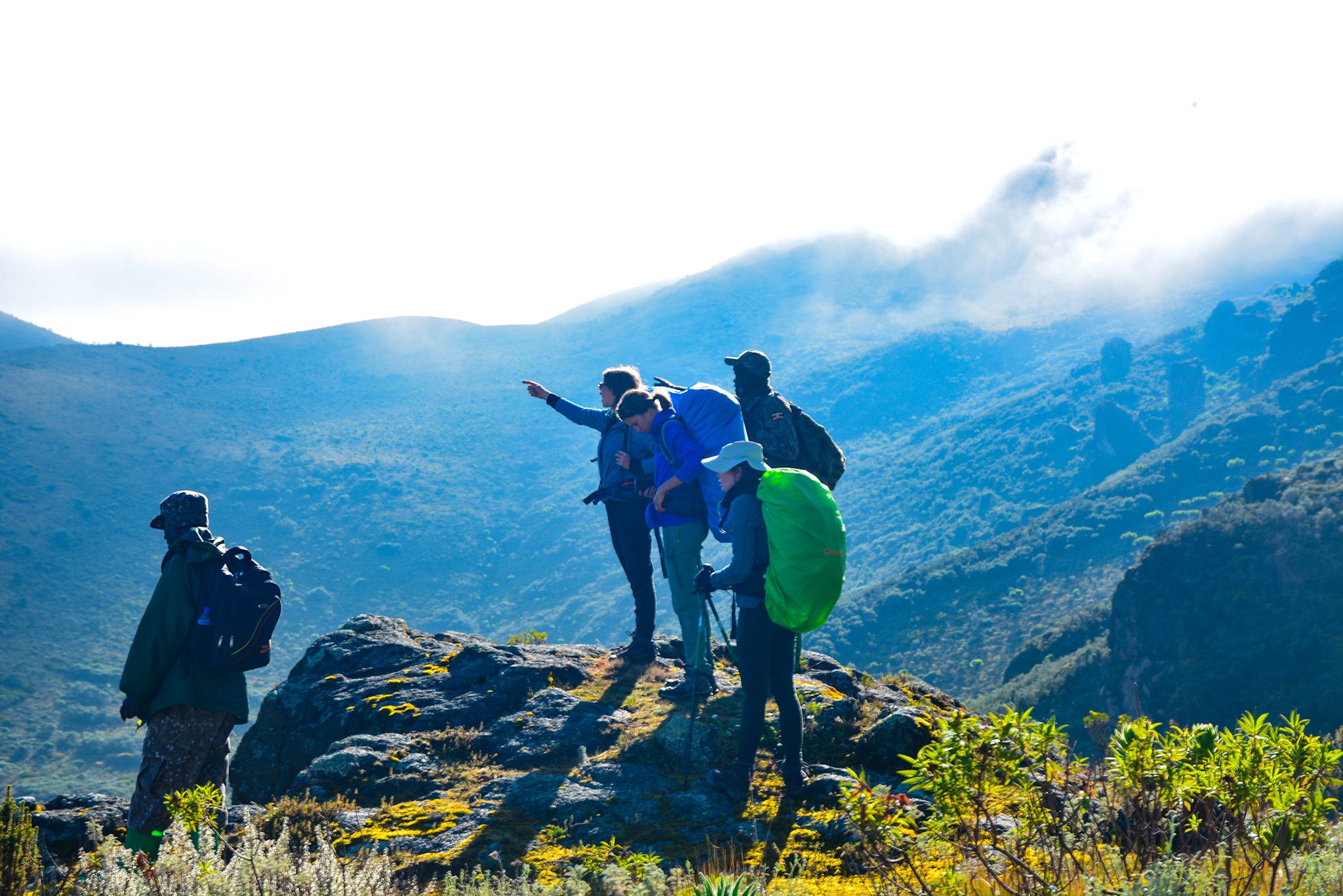
Mount Elgon formed over 24 million years ago, making it older than peaks like Mount Kilimanjaro. Over time, erosion softened its once-dramatic slopes into a broad, rolling massif. Instead of jagged ridges, the mountain spreads outward in long, gentle contours, creating one of the largest volcanic bases on Earth.
Today, Mount Elgon National Park protects much of this landscape. Recognized as a UNESCO Biosphere Reserve, the park holds remarkable ecological value. It contains a compressed spectrum of habitats rarely found within a single destination. This diversity shapes the identity of Mt. Elgon as more than just a mountain—it is an entire ecological world layered across altitude.
A Mountain of Many Ecosystems
Each stage of the climb introduces a new environment. The lower slopes feature dense montane forest, rich in moisture and alive with sound. As you ascend, bamboo forests emerge, swaying gently in the wind. Higher still, heath and moorland stretch outward under open skies.
This progression creates a sense of movement through distinct natural zones. It feels less like climbing a mountain and more like traveling across continents in a matter of days. The vegetation changes, the air shifts, and the pace of life adjusts with every step.
Cultural Significance
Mt. Elgon is not only a natural landmark; it is also a cultural anchor. The Bagisu people live along its slopes, drawing both sustenance and identity from the mountain. Their farming traditions rely on its fertile volcanic soils, while their spiritual beliefs reflect a deep respect for its presence.
For visitors, this cultural connection adds depth to the experience. Encounters with local communities reveal stories and traditions that cannot be found in guidebooks. The mountain becomes more than scenery it becomes a living landscape shaped by human history.
The Safari Experience: Hiking Through Layers of Wonder
Entering the Forest
Most treks begin within the dense montane forest. The air feels thick and humid, carrying the scent of earth and vegetation. Sunlight filters through tall trees, casting shifting patterns across the trail. Every step feels grounded in something ancient.
Colobus monkeys leap between branches overhead. Small antelope move quietly through the undergrowth. Without the noise of vehicles, the forest feels intimate. You notice details that often go unseen the rustle of leaves, the distant call of birds, the subtle movement of wildlife.
Transition Through Bamboo Zones
As the climb continues, the forest begins to open. Bamboo replaces dense trees, creating a lighter and more breathable environment. The path becomes less enclosed, and the landscape begins to reveal itself.
Views stretch across valleys below. Layers of green roll outward into the distance. The sense of elevation becomes more tangible, yet the climb remains steady and manageable.
Into the Afro-Alpine World
Higher up, the transformation becomes dramatic. Moorlands replace forest, and the terrain takes on an almost surreal quality. Giant lobelias and groundsels rise from the earth, their unusual shapes giving the landscape an otherworldly feel.
The air grows cooler and clearer. Sounds diminish, replaced by a profound stillness. At this altitude, the mountain reveals its scale in full. The horizon expands, and the sense of isolation deepens.
Reaching the Caldera
The summit of Mt. Elgon defies expectation. Instead of a sharp peak, it opens into a vast caldera—a wide, gentle basin that stretches across the mountain’s crown. The space feels calm and expansive, almost meditative.
Standing here, you become aware of the mountain’s immense age. You are not simply at the top of a climb. You are inside the remains of an ancient volcano, shaped by millions of years of geological change.
Waterfalls, Caves, and Hidden Features
The experience extends beyond elevation. Along the trails, waterfalls cascade down steep rock faces, adding movement and sound to the landscape. Hidden caves, formed by centuries of erosion, offer glimpses into the mountain’s geological past.
Some of these caves attract wildlife. Elephants occasionally venture inside to mine salt deposits, creating rare and fascinating encounters. These moments feel raw and unscripted, reminding you that this is still a living wilderness.
Evenings on the Mountain
As evening falls, the atmosphere shifts. Temperatures drop, and the sky transforms into a field of stars. With little light pollution, the night sky appears vivid and expansive.
Camping on Mt. Elgon strips away distractions. The experience feels simple yet deeply rewarding. You fall asleep to the quiet rhythm of nature, surrounded by a landscape that feels both vast and intimate.
Wildlife, Ecosystems, and Cultural Depth
Mt. Elgon does not compete with Uganda’s savanna parks in terms of large predators or dramatic wildlife sightings. Instead, it offers ecological richness and subtle encounters that reward patience and observation.
The mountain supports a variety of species, including primates, small antelope, and an impressive diversity of birds. For birdwatchers, this region holds particular appeal. Over 300 species inhabit its forests and highlands, each adapted to specific ecological zones.
This biodiversity reflects the mountain’s role as a critical environmental system. Its forests act as a water catchment area, feeding rivers that sustain communities and ecosystems far beyond its slopes. Protecting Mt. Elgon means protecting an entire network of life.
UNESCO recognizes this importance through its Biosphere Reserve designation. Conservation efforts focus on maintaining a balance between human activity and environmental preservation.
Local communities play an essential role in this balance. Tourism provides income while encouraging sustainable practices. Guided hiking safaris create opportunities for employment and cultural exchange. When travelers choose responsible experiences, they directly support both conservation and community well-being.
Practical Travel Planning: What You Need to Know
Planning a hike on Mt. Elgon requires thoughtful preparation. The mountain’s conditions can change quickly, and flexibility is key.
The dry seasons, from June to August and December to February, offer the most reliable conditions. Trails remain more accessible, and rainfall is less frequent. However, the mountain’s climate remains unpredictable. Rain can arrive without warning, contributing to the lush environment that defines the region.
Most hiking itineraries span three to five days. Routes such as the Sasa and Piswa trails provide different perspectives of the mountain. Some paths offer steeper climbs, while others allow for more gradual ascents.
Preparation plays a critical role in the overall experience. Sturdy hiking boots, layered clothing, and waterproof gear are essential. While the trek does not require technical climbing skills, a reasonable level of fitness helps ensure comfort and enjoyment.
Guides add significant value to the journey. They provide navigation, ensure safety, and offer insights that deepen understanding of the landscape. Their knowledge transforms the hike into a more meaningful experience, connecting travelers to the mountain’s ecological and cultural stories.
Expert Tips for an Exceptional Uganda Hiking Safari
A successful Mt. Elgon experience depends on mindset as much as preparation. Approach the journey with patience. The mountain reveals itself gradually, and rushing diminishes its impact.
Take time to engage with your surroundings. Notice the transitions between ecosystems. Pay attention to the subtle details the sound of wind through bamboo, the texture of moss-covered trees, the shifting colors of the landscape.
Listen to your guide. Their perspective enriches every stage of the trek. They interpret signs of wildlife, explain plant life, and share stories that bring the mountain to life.
Pack carefully but avoid overloading yourself. Balance comfort with practicality. Weather conditions can change, so adaptability matters.
Above all, remain open to the unexpected. The most memorable moments often occur outside planned highlights a sudden clearing in the mist, a quiet wildlife encounter, or a view that unfolds without warning.
A Broader Perspective: The Future of Mt. Elgon Tourism
Travel trends continue to evolve. More travelers now seek destinations that offer authenticity and space. They look for experiences that feel personal rather than crowded. Mt. Elgon fits this shift naturally.
It’s quiet trails and diverse ecosystems provide a sense of escape that is increasingly rare. However, growing interest brings new challenges. Protecting the mountain’s fragile environment requires careful management.
Uganda has made strong progress in promoting sustainable tourism. Responsible hiking safaris help preserve the landscape while supporting local communities. This approach ensures that Mt. Elgon remains both accessible and protected.
Conclusion: Rediscovering the Essence of Exploration
Mt. Elgon invites a different kind of journey. It encourages you to slow down, to walk, and to engage deeply with the natural world. A Uganda hiking safari on Mount Elgon becomes more than an adventure. It becomes a shift in perspective.
Here, the experience feels quieter yet more profound. You trade speed for depth and spectacle for connection. The mountain does not overwhelm with drama. Instead, it reveals its beauty gradually, rewarding those who take the time to notice.
For travelers willing to step beyond familiar routes, Mt. Elgon offers something rare. It presents a version of Uganda that feels untouched, authentic, and deeply enriching. In its silence and scale, it reminds you of what travel can still be a genuine encounter with the wild.


