Unlike most lions across the African savannah, the famous Ishasha lions spend hours stretched across giant fig tree branches. They often sleep above the ground during the hottest parts of the day. Watching these massive predators balance effortlessly in trees creates one of the world’s most unique wildlife encounters.
Ishasha lies in southwestern Uganda near Bwindi Impenetrable National Park. The area offers far more than tree-climbing lions. Travelers enjoy breathtaking landscapes, rich biodiversity, fewer safari crowds, excellent game viewing, and easy access to gorilla trekking. These experiences make it one of Africa’s best safari circuits.
This complete Tree Climbing Lions Ishasha Uganda Guide explains everything travelers should know before visiting the Ishasha sector. It covers why lions climb trees, the best time to visit, transportation options, accommodation, safari activities, photography tips, conservation efforts, and gorilla trekking experiences in Uganda.
Where Is the Ishasha Sector Located?
The Ishasha sector lies in the southern part of Queen Elizabeth National Park, Uganda’s most visited national park. The park stretches across western Uganda between Lake George and Lake Edward. Together, these ecosystems support some of Uganda’s richest wildlife habitats.
Ishasha sits close to the border of the Democratic Republic of the Congo. The area also serves as an important connection point for travelers moving between Queen Elizabeth National Park and Bwindi for gorilla trekking.
Open savannah plains, scattered acacia trees, riverine forests, and giant fig trees define the landscape. These trees provide ideal resting spots for the famous climbing lions. Compared to northern Queen Elizabeth National Park, Ishasha feels quieter, wilder, and more remote. Visitors therefore enjoy a more authentic safari experience.
The drive from Kampala to Ishasha takes about six to eight hours, depending on road conditions and stopovers. Many travelers combine the journey with visits to destinations such as Lake Mburo National Park or Bwindi Impenetrable National Park.
Why Are the Ishasha Lions Famous?
The tree-climbing lions of Ishasha attract global attention because lions rarely climb trees. Leopards naturally adapt well to climbing, but lions are heavier and usually stay on the ground.
In Ishasha, entire prides regularly climb large fig and acacia trees. Visitors often spot lions draped across thick branches. Some hang their legs over the sides while sleeping peacefully above the savannah.
This unusual behavior attracts wildlife researchers, filmmakers, photographers, and tourists from around the world. Many travelers consider these lions one of the highlights of their Uganda safari.
The Ishasha lions have also become internationally recognized symbols of Uganda tourism. They offer a wildlife experience that few other African destinations can match.
Why Do Lions Climb Trees in Ishasha?
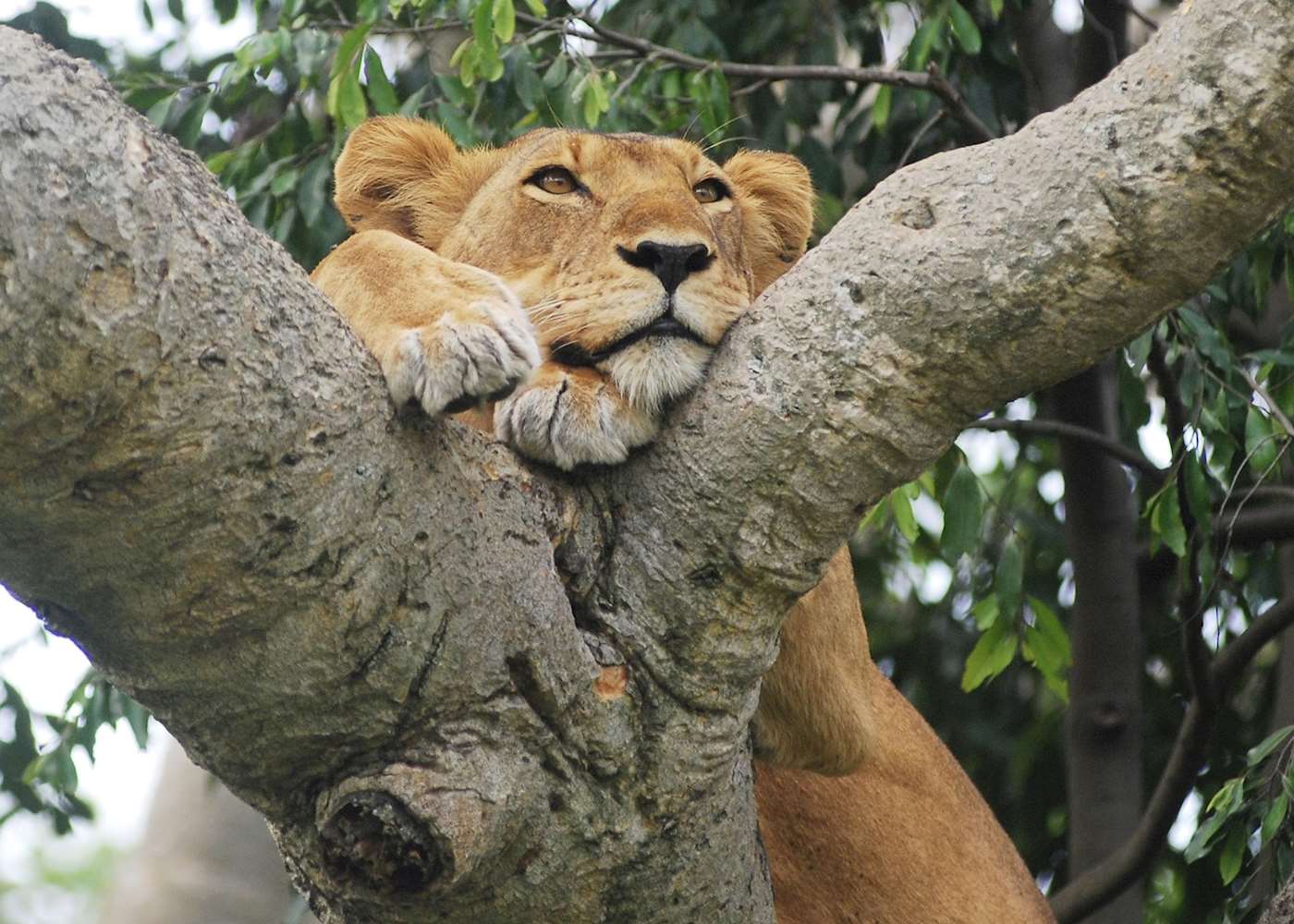
Scientists continue to study this unusual behavior, but several explanations remain widely accepted.
Temperature regulation appears to be one of the main reasons. During the dry season, ground temperatures in Ishasha become extremely hot. Lions climb trees to enjoy cooler breezes above the ground.
Insect avoidance also plays an important role. Tsetse flies and other biting insects thrive in the Ishasha plains. Lions climb trees to escape constant irritation from these insects, especially during hotter hours.
Tree climbing also gives lions strategic advantages. Elevated positions help them scan the surrounding plains for prey such as Uganda kob, buffalo, and antelope. From the branches, lions can observe movement across long distances while remaining relatively concealed.
Researchers believe the behavior may also pass from one generation to another through observation. Young cubs watch adult lions climb trees and later imitate them. Over time, tree climbing becomes a common behavior within the pride.
Travelers occasionally see tree-climbing lions in places such as Lake Manyara National Park. However, the Ishasha sector remains one of Africa’s most reliable locations for this rare wildlife experience.
Best Time to Visit Ishasha for Tree Climbing Lions
Travelers can visit the Ishasha sector throughout the year, but dry seasons offer the best wildlife viewing opportunities.
The months from June to September and December to February provide ideal conditions. During these periods, vegetation becomes thinner, making wildlife easier to spot. Animals also gather around water sources, which increases sighting opportunities during game drives.
Hot afternoons during the dry season provide excellent opportunities to see lions resting in trees. As temperatures rise, the lions often climb into fig trees to cool down.
The rainy seasons from March to May and October to November transform Ishasha into a lush green landscape. Although thicker grass can make wildlife harder to locate, the park becomes quieter and more peaceful because fewer tourists visit during this period.
Birdwatchers particularly enjoy the rainy months because migratory bird species arrive in large numbers.
The Best Time of Day to Spot Tree Climbing Lions
Safari timing strongly influences the chances of spotting Ishasha lions.
Early morning game drives allow visitors to observe predators while they remain active after nighttime hunting. Lions may still walk across the plains or rest near roadside areas before temperatures increase.
Late morning and afternoon usually provide the best opportunities to see lions resting in trees. As the sun becomes hotter, the lions climb into trees and relax there for several hours.
Experienced safari guides communicate with other drivers and park rangers throughout the day. This teamwork greatly improves the chances of successful sightings.
Wildlife Experiences Beyond the Tree Climbing Lions
Although tree-climbing lions remain the main attraction, the Ishasha sector supports exceptional wildlife diversity throughout the year.
Large elephant herds frequently roam the plains and riverbanks. African buffaloes graze across the open grasslands. Ishasha also hosts topis, one of Uganda’s most beautiful antelope species.
Leopards inhabit the region as well, though they remain elusive and mostly active during early morning or evening hours. Spotted hyenas patrol the plains at night, while numerous bird species thrive throughout the ecosystem.
The Ishasha River supports rich biodiversity and attracts many animals throughout the year. Predators, herbivores, birds, and scenic landscapes together create a complete safari experience that extends far beyond the famous lions.
How to Get to the Ishasha Sector
Travelers can reach Ishasha either by road or through domestic flights.
Road safaris remain the most popular option because they allow visitors to experience Uganda’s changing landscapes and national parks along the route. The journey from Kampala passes through rolling hills, rural towns, tea plantations, and savannah landscapes before reaching Queen Elizabeth National Park.
Many safari itineraries include overnight stops in destinations such as Lake Mburo National Park or northern Queen Elizabeth National Park before continuing south toward Ishasha.
Travelers with limited time often choose domestic charter flights from Entebbe International Airport. These flights provide quicker access to nearby airstrips such as Kihihi or Kasese. From there, visitors continue by safari vehicle to the Ishasha sector.
Although flights reduce travel time significantly, many travelers still prefer road safaris because they provide richer cultural and scenic experiences.
Accommodation in Ishasha Sector
The Ishasha sector offers accommodation options for luxury travelers, honeymooners, photographers, mid-range visitors, and budget adventurers.
Luxury lodges provide elegant safari experiences surrounded by wilderness. Ishasha Wilderness Camp remains one of the area’s most popular lodges because of its riverside setting, comfortable tented rooms, excellent service, and proximity to wildlife viewing areas.
Kyambura Gorge Lodge also provides a premium safari experience. Guests enjoy luxury accommodation with easy access to chimpanzee tracking and Ishasha game drives.
Mid-range accommodations such as Enjojo Lodge offer comfortable stays within natural environments filled with birds and wildlife. These lodges attract travelers who want quality experiences without luxury pricing.
Budget travelers can also find campsites and affordable guesthouses near the park. These options suit backpackers, students, and self-drive safari visitors exploring Uganda on smaller budgets.
Combining Ishasha with Gorilla Trekking
One major advantage of visiting Ishasha is its location near Bwindi Impenetrable National Park, home to Uganda’s famous mountain gorillas.
Many travelers combine tree-climbing lion safaris with gorilla trekking to create one of Africa’s most rewarding wildlife adventures. The journey between Ishasha and Bwindi usually takes only a few hours, making the combination both practical and highly popular.
A typical itinerary includes wildlife viewing in Queen Elizabeth National Park followed by gorilla trekking in Bwindi. This combination allows visitors to experience both classic savannah wildlife and intimate rainforest encounters with endangered mountain gorillas during one trip.
The contrast between Ishasha’s open plains and Bwindi’s dense forests creates a remarkably diverse safari experience.
Gorilla Trekking Experience Near Ishasha
Gorilla trekking in Uganda ranks among the world’s most extraordinary wildlife experiences. Visitors hike through tropical rainforest with experienced trackers while searching for habituated gorilla families.
Once trackers locate the gorillas, visitors spend one hour observing them as they feed, interact, groom each other, and care for their young.
Many travelers choose the Buhoma sector because it lies relatively close to Ishasha. Other nearby sectors include Rushaga and Ruhija.
By combining tree-climbing lions with gorilla trekking, travelers experience two of Uganda’s greatest wildlife highlights in one unforgettable safari itinerary.
Photography Tips for Tree Climbing Lions
Photographing lions in trees requires preparation, patience, and proper timing.
A zoom lens works best because lions often rest high in branches or far from safari tracks. Early morning and late afternoon provide ideal lighting conditions for wildlife photography. These hours create softer shadows and warmer colors.
Visitors should also carry binoculars to help locate lions hidden among thick branches and leaves.
Patience remains essential because lions may stay motionless for long periods. However, moments of interaction, stretching, grooming, or movement between branches can produce spectacular photographs.
Guides who know the Ishasha terrain position vehicles carefully to maximize photography angles while maintaining safe distances from the animals.
Conservation Challenges Facing the Ishasha Lions
Like many African predators, the Ishasha lions face growing conservation pressures.
Human-wildlife conflict remains one of the biggest challenges because expanding communities compete for land and resources near protected areas. Lions occasionally prey on livestock outside park boundaries, which creates tensions with local communities.
Poaching threatens wildlife populations throughout the ecosystem, while habitat changes and declining prey numbers also affect predator survival.
Tourism supports conservation efforts by generating revenue for wildlife protection, ranger patrols, anti-poaching operations, and community development projects.
Responsible tourism helps future generations continue experiencing Uganda’s extraordinary tree-climbing lions.
Cultural Experiences Around Ishasha
Wildlife viewing is not the only attraction around Ishasha. Travelers can also engage with local communities surrounding the park.
Cultural experiences include traditional dance performances, coffee tours, village walks, and visits to local craft markets. These activities help visitors understand Ugandan culture and daily life while supporting community-based tourism initiatives.
Many travelers believe cultural interactions deepen their understanding of Uganda beyond its national parks.
The warmth and hospitality of local communities often become some of the safari’s most memorable experiences.
What Makes Ishasha Different from Other Safari Destinations?
One defining characteristic of Ishasha is its quiet and uncrowded atmosphere. Unlike heavily visited safari destinations in East Africa, Ishasha often feels peaceful and untouched.
Visitors can spend hours exploring the plains without encountering large tourist crowds. This setting creates more intimate wildlife experiences and better photography opportunities.
The tree-climbing lions add another level of exclusivity that distinguishes Ishasha from many African safari parks.
Its strategic location near Bwindi, rich biodiversity, scenic landscapes, and authentic wilderness atmosphere make Ishasha one of Africa’s most rewarding safari destinations.
Frequently Asked Questions About Tree Climbing Lions in Ishasha
Where can I see tree climbing lions in Uganda?
Tree-climbing lions are mainly found in the Ishasha sector of Queen Elizabeth National Park in southwestern Uganda. This area is internationally known for lions that regularly rest and sleep in large fig trees scattered across the savannah plains.
Why do lions climb trees in Ishasha?
Researchers believe the lions climb trees to escape heat on the ground, avoid biting insects such as tsetse flies, and gain a better view of prey and their surroundings. Over time, this behavior has also become socially learned within the prides.
What is the best time to see tree climbing lions in Ishasha?
The best time to visit is during the dry seasons from June to September and December to February. Wildlife is easier to spot because vegetation is thinner, and lions are more commonly seen resting in trees during hot afternoons.
Are tree climbing lions rare in Africa?
Yes. Tree-climbing lions are extremely rare and are only regularly seen in a few places in Africa, especially in Ishasha, Uganda, and Lake Manyara National Park.
How many days do I need for an Ishasha safari?
Most travelers spend one to two nights in Ishasha. This allows enough time for multiple game drives and increases the chances of seeing the tree-climbing lions. Many visitors combine Ishasha with gorilla trekking in Bwindi Impenetrable National Park.
Can I combine Ishasha with gorilla trekking?
Yes. Ishasha is one of the best safari destinations to combine with gorilla trekking because it is located relatively close to Bwindi. Many Uganda safari itineraries include both experiences in one trip.
What animals can I see besides tree climbing lions?
In addition to lions, visitors commonly see elephants, buffaloes, topis, Uganda kobs, hyenas, warthogs, and numerous bird species. Leopards are also present although they are more difficult to spot.
Is Ishasha safe for tourists?
Yes. Ishasha is generally safe for tourists when visited with registered safari operators and experienced guides. Uganda Wildlife Authority rangers regularly patrol the park, and visitors are advised to follow safari safety guidelines during game drives.
What should I pack for an Ishasha safari?
Travelers should bring lightweight neutral-colored clothing, a camera, binoculars, sunscreen, insect repellent, a hat, comfortable shoes, and a light rain jacket. Photography enthusiasts should also carry zoom lenses for wildlife photography.
Are the tree climbing lions guaranteed to be seen?
Wildlife sightings can never be guaranteed because the lions move freely throughout the park. However, Ishasha offers one of the highest chances in Africa of seeing lions in trees, especially with experienced safari guides.
Final Thoughts
The tree-climbing lions of Ishasha remain one of the most extraordinary wildlife experiences in Africa. From watching massive lions stretched across ancient fig tree branches to exploring the untouched savannah landscapes of Queen Elizabeth National Park, every moment in Ishasha feels authentic, wild, and unforgettable.
What makes this destination even more remarkable is its perfect combination of rare wildlife encounters, peaceful safari experiences, stunning scenery, and easy access to gorilla trekking in Bwindi Impenetrable National Park. Few safari destinations in Africa offer such diversity within a single journey.
Whether you are a wildlife photographer, honeymoon traveler, adventure seeker, or first-time safari visitor, Ishasha promises memories that will last a lifetime.
If you are planning a Uganda safari and would like to experience the famous tree-climbing lions alongside gorilla trekking, chimpanzee tracking, or tailor-made wildlife adventures, now is the perfect time to start planning your journey. Contact Us to customize an unforgettable Ishasha safari experience that matches your travel style, budget, and interests.


