
Trekking Through Bwindi Impenetrable National Park — The Ultimate Rainforest Adventure in Uganda

Deep in the mist-covered mountains of southwestern Uganda lies one of Africa’s oldest and richest rainforests. Ancient trees rise above tangled vines, mountain fog drifts quietly through the forest canopy, and hidden beneath the thick jungle lives nearly half of the world’s remaining mountain gorillas. This is Bwindi Impenetrable National Park, a place where trekking becomes far more than an outdoor activity. It becomes a deep journey into one of the last truly wild forests on Earth.
For many travelers, trekking through Bwindi begins as a search for mountain gorillas. Yet the experience quickly becomes something much bigger. Every muddy trail, steep hill, distant bird call, and quiet forest moment creates a strong connection with nature that few places still offer today.
Bwindi is not a park built for simple sightseeing. It is a living rainforest shaped by wildlife movement, rainfall, changing weather, and centuries of natural growth. Trekking through it requires patience, energy, and curiosity. However, for travelers willing to take on the challenge, the reward becomes one of Africa’s most unforgettable safari experiences.
This guide explores everything travelers need to know about trekking through Bwindi Forest, including gorilla encounters, forest wildlife, travel seasons, fitness expectations, photography opportunities, local culture, and why Bwindi remains one of the world’s greatest wildlife destinations.
Understanding the Wilderness of Bwindi Impenetrable National Park
The word “Impenetrable” is more than just a dramatic name. It describes the thick and rugged nature of the rainforest itself. Bwindi contains ancient jungle landscapes shaped over thousands of years, creating an environment filled with dense plants, steep valleys, giant tree roots, and narrow forest paths.
Located within the Albertine Rift region, the park stretches across mountain land near the borders of Rwanda and Democratic Republic of the Congo. The height of the terrain changes greatly across the park, creating different weather patterns and habitats that support a wide range of wildlife.
The rainforest feels alive every moment of the day. Sunlight breaks through layers of thick canopy while birds, insects, and primates move constantly through the forest. Early morning mist often hangs between the trees, giving the landscape a timeless and mysterious feeling.
What makes Bwindi special is not only the presence of mountain gorillas, but also the rich wildlife surrounding them. The forest supports hundreds of bird species, butterflies, mammals, reptiles, and rare plants found nowhere else in the region.
The Experience of Trekking Through Bwindi Forest
Trekking through Bwindi feels very different from most safari experiences in Africa. Unlike traditional game drives where travelers stay inside safari vehicles, Bwindi requires visitors to enter the forest on foot and walk directly through the gorillas’ natural home.
The day usually begins early in the morning at one of the park’s trekking areas. After a briefing from rangers of the Uganda Wildlife Authority, small groups are assigned specific gorilla families based on location and trekking difficulty.
From there, the adventure becomes wonderfully unpredictable.
Some gorilla families remain close to the starting points, while others move deep into mountain rainforest areas. Trekkers may spend one hour hiking on moderate trails or several hours climbing steep hills and muddy jungle paths before finding the gorillas.
The journey itself becomes part of the adventure. Forest trails pass through thick vegetation, bamboo zones, river valleys, and high ridges overlooking endless green mountains. Rangers sometimes use machetes to clear overgrown paths while trackers communicate from deeper inside the forest to follow gorilla movement.
Unlike modern tourist attractions designed mainly for comfort, Bwindi feels truly wild. That natural feeling is exactly what makes the trekking experience unforgettable.
The Emotional Impact of Seeing Mountain Gorillas
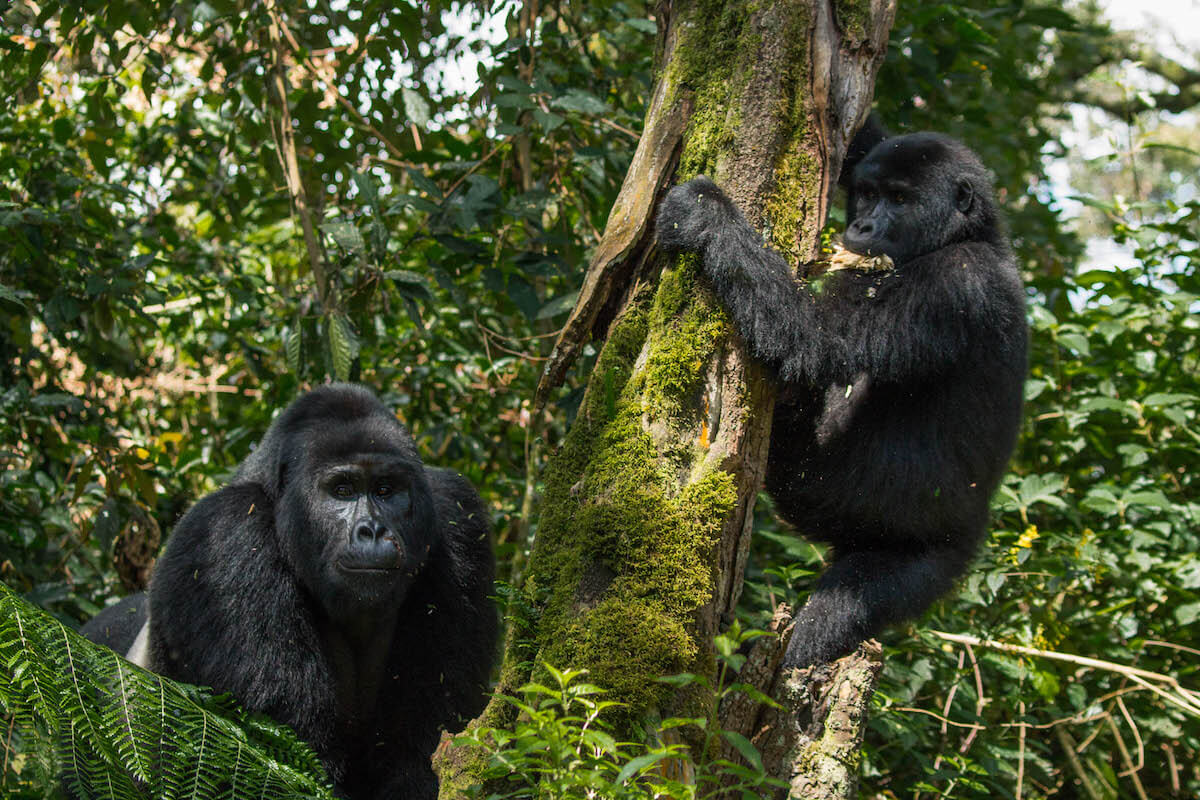
Nothing fully prepares travelers for the moment they first see mountain gorillas in the wild.
After hours of hiking through thick rainforest, the atmosphere suddenly changes. Rangers speak softly, movement slows down, and the forest becomes quiet. Then, through layers of vines and leaves, huge silverbacks and gentle gorilla families appear only a few meters away.
The experience feels deeply emotional because the gorillas seem remarkably human. Their facial expressions, social behavior, eye contact, and interactions with family members create an immediate sense of connection.
Young gorillas tumble playfully through the forest while mothers protect infants close to their bodies. Large silverbacks sit calmly nearby, showing both great strength and quiet intelligence.
For many visitors, the strongest emotion comes from realizing that these animals are not performing for tourism. They are simply living their daily lives inside one of Africa’s oldest forests while humans briefly enter their world.
That single hour with the gorillas often becomes the most unforgettable part of an entire Uganda safari.
Trekking Areas Inside Bwindi Impenetrable National Park
Bwindi is divided into several trekking areas, each offering a different forest atmosphere, terrain style, and trekking experience.
The Buhoma Sector area is known for its well-developed tourism facilities, beautiful forest surroundings, and comfortable lodges. It was the first area opened for gorilla tourism in Uganda and remains popular among travelers looking for easier access combined with immersive rainforest experiences.
Further south, Rushaga Sector contains several habituated gorilla families spread across different elevations. The area offers flexibility for different fitness levels and remains one of the busiest gorilla trekking regions in Uganda.
Meanwhile, Nkuringo Sector offers some of the park’s most dramatic scenery and more demanding trekking conditions. Steep mountain trails and wide views create a stronger sense of adventure for experienced hikers.
Each area reveals a different side of Bwindi, yet all share the same deep rainforest atmosphere.
Wildlife Beyond Gorilla Trekking
Although mountain gorillas attract most visitors, Bwindi’s wildlife goes far beyond primates.
The forest contains more than 350 bird species, including many rare Albertine Rift birds highly valued by birdwatchers. Colorful turacos, forest hornbills, and bright sunbirds move through the canopy while hidden streams support frogs and reptiles rarely seen elsewhere.
Bwindi also protects forest elephants, chimpanzees, duikers, giant forest hogs, and several monkey species. While some animals remain difficult to spot because of the thick vegetation, their presence adds to the feeling that the forest is constantly alive.
The plant life is equally impressive. Ancient hardwood trees, giant ferns, orchids, moss-covered branches, and climbing vines create layered rainforest scenery unlike the open savannah landscapes found elsewhere in Uganda.
This rich natural environment helped Bwindi earn recognition as a UNESCO World Heritage Site.
Physical Challenges of Trekking Through Bwindi
Trekking through Bwindi is rewarding, but it can also be physically demanding.
The terrain changes constantly between steep hills, slippery mud, uneven roots, narrow trails, and thick vegetation. Higher altitude also increases physical effort, especially for travelers not used to mountain hiking.
Rainfall plays an important role too. Even during drier months, parts of the forest remain muddy because of the rainforest climate. Hiking boots with strong grip are very important for safety and balance.
Still, trekking difficulty varies depending on weather conditions, gorilla location, and trekking area. Rangers try to match visitors with suitable gorilla groups whenever possible.
Hiring local porters can also improve comfort greatly. Porters help carry backpacks, provide support during steep climbs, and assist travelers on slippery trails.
Despite the physical effort, most trekkers finish the experience feeling proud and deeply fulfilled.
The Best Time for Trekking Through Bwindi Forest
Bwindi can be visited throughout the year, although weather conditions affect trekking experiences differently.
Dry seasons usually provide easier hiking because trails remain firmer and vegetation becomes slightly less dense. These months also improve visibility for photography and reduce the strain caused by deep mud.
Rainy seasons, however, create a different kind of beauty. The forest becomes intensely green, mist settles dramatically between mountain slopes, and the rainforest atmosphere feels even more magical.
Birdwatching also improves during wetter months as migratory birds arrive and breeding activity increases.
In the end, Bwindi remains rewarding throughout the year because the rainforest changes beautifully with each season.
Photography and Storytelling in Bwindi Forest
Bwindi is one of Africa’s most powerful destinations for photographers and storytellers.
Unlike open savannah parks where wildlife is photographed against wide landscapes, Bwindi creates close and emotional rainforest scenes shaped by soft light, thick vegetation, and drifting mist.
Photographing gorillas inside dense jungle conditions requires patience and flexibility. Light changes quickly beneath the forest canopy while gorillas move unpredictably through vegetation.
However, these challenges also create photographs impossible to capture anywhere else. The rainforest gives every image emotional depth and natural atmosphere.
Beyond wildlife photography, Bwindi also offers beautiful opportunities for landscape images, cultural portraits, and conservation storytelling.
Conservation and the Future of Bwindi
Tourism plays a major role in protecting Bwindi’s mountain gorillas and rainforest ecosystems.
Money raised through gorilla permits supports conservation programs, anti-poaching patrols, ranger salaries, and local community projects. Tourism also creates jobs that reduce pressure on forest resources.
Uganda’s gorilla conservation success shows how responsible tourism can help protect endangered wildlife. Decades ago, mountain gorillas faced serious threats from habitat destruction and poaching. Today, their numbers have improved because of strong conservation work supported partly by trekking tourism.
For many travelers, this gives the experience deeper meaning because visiting Bwindi directly supports the future survival of mountain gorillas.
Frequently Asked Questions About Trekking Through Bwindi Forest
How difficult is trekking through Bwindi Forest?
Difficulty depends on weather, gorilla location, and trekking area. Some treks are moderate, while others involve several hours of steep hiking.
How long does gorilla trekking in Bwindi take?
Treks can last anywhere from one to eight hours depending on how far the gorilla families have moved into the forest.
What is the best trekking area in Bwindi?
Rushaga Sector offers flexibility and several gorilla families, while Buhoma Sector is known for easier access and luxury lodges.
Is Bwindi Forest worth visiting?
Yes. Bwindi offers one of Africa’s most immersive wildlife experiences, combining mountain gorilla encounters with ancient rainforest scenery.
What should I wear for trekking through Bwindi?
Travelers should wear waterproof hiking boots, long trousers, long sleeves, gloves, and rain jackets suitable for muddy rainforest conditions.
Can beginners trek through Bwindi Forest?
Yes. Rangers assign trekking groups based on fitness levels whenever possible, making the experience manageable for many travelers.
What makes Bwindi different from other safari destinations?
Unlike vehicle-based safaris, Bwindi requires travelers to walk through dense rainforest on foot, creating a far more personal and emotional wildlife experience.
Final Thoughts on Trekking Through Bwindi Forest
Trekking through Bwindi Impenetrable National Park is far more than a wildlife activity. It is a journey into one of Africa’s last untouched rainforests where mountain gorillas still move freely through ancient jungle landscapes shaped by mist, altitude, and time.
The experience demands effort, patience, and determination. Yet every muddy trail, steep climb, and quiet forest moment leads toward something extraordinary: the chance to stand only meters away from wild mountain gorillas in their natural home.
Very few places in the world still offer this level of authenticity and emotional power. That is why Bwindi continues to rank among the greatest trekking and conservation destinations on Earth.


