

If you are wondering what to expect on a gorilla trek, prepare for an experience that combines rainforest hiking, wildlife tracking and an unforgettable encounter with mountain gorillas. A gorilla trek in Uganda takes you deep into the ancient forests of Bwindi Impenetrable National Park or Mgahinga Gorilla National Park, where trained guides and trackers lead you in search of a habituated gorilla family.
Uganda Tourism Board (UTB), the country’s statutory tourism promotion and quality-assurance body, recognizes mountain gorilla trekking as one of Uganda’s premier tourism experiences.
If this will be your first gorilla trekking experience, understanding what happens before, during and after the trek will make the adventure far more enjoyable.
What Is Gorilla Trekking Really Like?
Gorilla trekking involves walking through the forest with trained UWA guides and trackers to locate a habituated mountain gorilla family.
Unlike a conventional game drive, there is no guarantee that the animals will be waiting in one particular location. The trackers follow signs such as footprints, vegetation disturbance, nests and other clues left by the gorillas.
Therefore, every trek feels slightly different.
Some groups may find their gorilla family after a relatively short walk. Others may spend several hours navigating steep slopes, dense vegetation and muddy trails before reaching the animals.
That uncertainty forms part of the adventure.
The forest itself becomes part of the experience. You may hear birds calling through the canopy, see butterflies moving between plants or encounter other signs of wildlife before you even reach the gorillas.
When the trackers finally locate the family, the atmosphere changes. Conversations become quieter, cameras come out and everyone begins watching carefully.
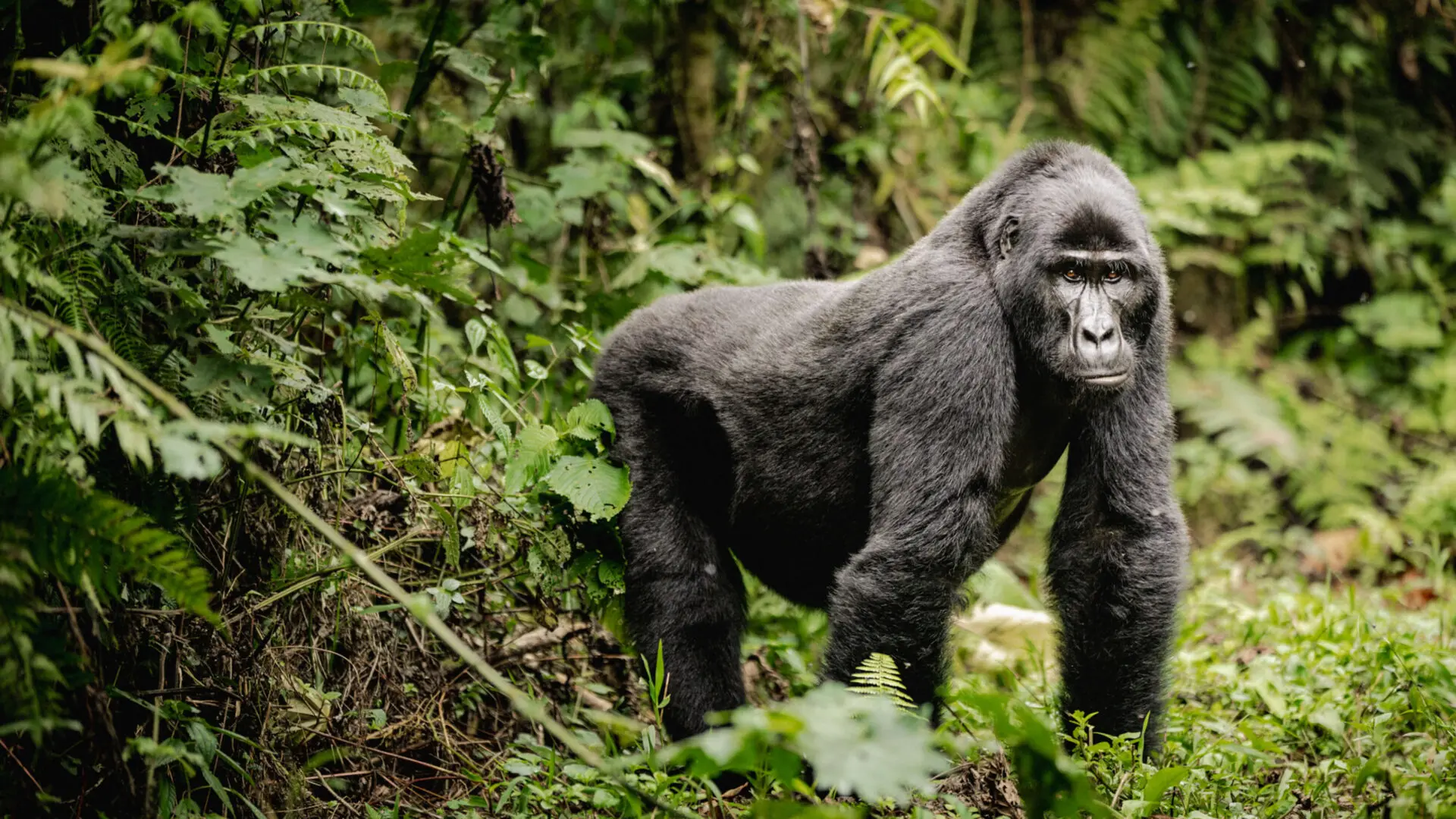
Then, suddenly, you may find yourself standing only a short distance from a silverback, mother and baby gorillas moving naturally through the forest.
That is the moment most travelers remember long after returning home.
Where Does Gorilla Trekking Take Place in Uganda?
Uganda offers gorilla trekking in two protected areas.
Bwindi Impenetrable National Park is the country’s best-known gorilla trekking destination and is home to roughly half of the world’s mountain gorilla population. UWA identifies four main trekking sectors: Buhoma, Ruhija, Rushaga and Nkuringo.
Mgahinga Gorilla National Park provides another opportunity to trek mountain gorillas in Uganda. The park forms part of the larger Virunga landscape and offers a different forest setting from Bwindi.
Your experience can therefore vary depending on the sector, gorilla family, accommodation location and trail conditions.
For travelers planning a safari, choosing the right trekking sector matters because it can influence driving time, accommodation and the overall rhythm of the itinerary.
What Happens Before the Gorilla Trek?
A typical gorilla trekking day starts early.
You normally wake before sunrise, have breakfast and prepare for the journey to the park’s designated trekking point. Your tour operator or guide will make sure you arrive with sufficient time for registration and briefing.
According to UWA’s current gorilla and chimpanzee tracking guidelines, visitors must report to the designated entry point for permit or ticket validation, orientation and briefing before tracking begins. Visitors then proceed under the supervision of UWA guides and trackers.
The briefing is more than an administrative formality.
It prepares you for responsible interaction with the gorillas. You learn how to behave in the forest, how to maintain the required distance, how to respond if a gorilla approaches and why hygiene and health precautions matter.
This is also where the guides explain the practical realities of the trek.
Once the briefing finishes, your group enters the forest.
How Long Does a Gorilla Trek Take?
One of the most important things to understand about gorilla trekking is that the duration is not fixed.
UWA currently states that gorilla treks in Bwindi and Mgahinga may take approximately two to seven hours, while the actual observation period with a habituated gorilla family is limited to one hour.
This means you should not book a gorilla trek assuming that you will be back at your lodge at a specific time.
The trackers know the approximate location of the gorillas, but the animals move. Their location can also change according to feeding patterns and other natural circumstances.
Terrain makes another major difference.
A relatively short trek can still feel demanding if the trail climbs steeply. Conversely, a longer trek on gentler terrain may feel easier.
Your fitness level, weather conditions and trekking sector all influence how the experience feels.
Is Gorilla Trekking Difficult?
Gorilla trekking requires a reasonable level of physical fitness, but you do not need to be an elite hiker.
The biggest challenge comes from the terrain rather than speed.
Bwindi is a mountainous rainforest environment, so trails can include steep climbs, descents, slippery sections, exposed roots and thick vegetation. Rain can make the ground considerably muddier.
However, the trekking pace normally allows travelers to walk gradually rather than race through the forest.
Your guides and trackers are there to manage the experience safely and responsibly.
If you are concerned about your physical ability, discuss this with your safari operator before booking. Your itinerary can be planned around the most appropriate trekking sector, accommodation location and available support.
For travelers who need additional assistance, porter services can also make a substantial difference. A porter can carry your daypack and help you navigate challenging sections while also providing direct economic benefits to local communities.
What Happens When You Find the Gorillas?
Finding the gorillas is often an emotional moment.
After following the trackers through the forest, you may suddenly hear branches moving nearby. Your guide may quietly signal that the family is close.
Then you see them.
Perhaps a juvenile is playing in the vegetation. Maybe a mother is resting with her baby. A silverback might sit nearby, watching the group.
The experience feels completely different from seeing wildlife from a vehicle.
You are sharing the forest with the animals.
However, the encounter follows strict conservation rules. UWA’s published regulations state that visitors should maintain a minimum distance of 10 metres from gorillas, avoid eating, drinking and smoking during the encounter, avoid flash photography, and turn away and cover the face when coughing or sneezing. Visits are limited to one hour per gorilla group per day.
These rules protect the gorillas as much as they protect visitors.
Mountain gorillas are susceptible to human illnesses, so responsible behavior is essential. UWA specifically advises travelers not to visit the gorillas if they have a cold or another infectious illness.
The One-Hour Gorilla Encounter
The one-hour encounter can pass surprisingly quickly.
At first, you may spend several minutes simply observing the family. Gradually, you begin noticing individual personalities and behaviors.
You might watch a youngster playing, a mother caring for an infant or a silverback moving through the vegetation.
Photography becomes tempting, but experienced guides encourage visitors to put the camera down occasionally and simply observe.
After spending hours walking through the forest, one hour can feel short. Yet the restriction exists for conservation reasons.
Limiting the time and number of visitors helps reduce pressure on the gorilla families and their habitat.
UWA’s current rules also limit a gorilla group to a maximum of eight visitors at a time.
The result is a carefully managed wildlife encounter rather than an uncontrolled tourist interaction.
What Is the Forest Like?
The word “trek” can sometimes create the wrong impression.
You are not simply walking along a marked path through a forest. Bwindi’s environment can be dense, green and remarkably atmospheric.
The canopy blocks much of the direct sunlight. Ferns, vines, mosses and other vegetation fill the landscape. The ground can become slippery after rain, while mist may settle over the hills.
You may also hear far more than you see.
Bird calls, insects, moving branches and distant sounds create a constant natural soundtrack.
For photographers, the forest presents both opportunities and challenges. Low light, dense vegetation and moving animals can make photography difficult. However, these same conditions create intimate and atmospheric images that differ dramatically from conventional savannah safari photographs.
What Should You Wear on a Gorilla Trek?
Comfort and protection matter more than fashion.
Wear lightweight, breathable clothing that covers your arms and legs. Long trousers help protect against vegetation and insects, while a long-sleeved shirt provides additional protection.
Good hiking boots with strong grip are particularly important because the trails can become muddy and slippery.
Rain protection is also essential. Even when the weather forecast looks favorable, rainforest conditions can change quickly.
Gloves can help when you need to hold vegetation for balance, while gaiters can protect your lower legs from mud and wet vegetation.
A small daypack is useful for carrying water, snacks for before or after the trek, personal medication and camera equipment.
Your safari operator should provide practical guidance before the trekking day because conditions vary between seasons and trekking sectors.
Gorilla Trekking Compared With a Traditional Wildlife Safari
The two experiences feel very different, even though both involve wildlife observation.
| Experience | Gorilla Trekking | Traditional Game Drive |
|---|---|---|
| Main environment | Mountain rainforest | Savannah, woodland or wetland |
| Main activity | Walking | Vehicle-based viewing |
| Wildlife focus | Mountain gorillas | Big Five and other wildlife |
| Typical physical effort | Moderate to demanding | Low |
| Encounter style | Intimate and immersive | Wider landscape viewing |
| Timing | Often several hours | Usually scheduled drives |
| Guide support | Guides and trackers | Safari guide/driver |
| Main highlight | One-hour gorilla encounter | Multiple wildlife sightings |
Combining both experiences can make a Uganda safari particularly rewarding.
You might spend one part of your journey searching for lions and elephants across open savannah and another walking quietly through ancient rainforest in search of mountain gorillas.
What Happens If It Rains?
Rain should not automatically ruin your trek.
In fact, rain is part of the rainforest environment.
The important thing is preparation.
Trails become slippery after rainfall, so good footwear and careful walking become even more important. A waterproof jacket or poncho can make the difference between an enjoyable experience and an uncomfortable one.
The forest can also become more dramatic after rain, with mist, fresh vegetation and increased forest sounds.
Because gorilla trekking operates in a natural environment, weather forms part of the adventure rather than something that the tourism experience can completely control.
What If I Am Not Very Fit?
Do not assume that limited hiking experience automatically rules out gorilla trekking.
The most important step is to be honest about your fitness level before your safari is confirmed.
A knowledgeable Uganda safari operator can help you choose an appropriate trekking sector and accommodation strategy. Depending on circumstances, porters can also provide valuable physical assistance.
However, travelers should still prepare.
Regular walking before the trip can improve endurance. Hiking on uneven ground is particularly useful preparation because the challenge often comes from terrain rather than distance.
Above all, avoid comparing yourself with other trekkers. Gorilla trekking is not a race.
The objective is to experience the forest and encounter the gorillas responsibly.
Gorilla Trekking Is Also a Conservation Experience
One of the most important aspects of gorilla trekking often receives less attention: your visit contributes to conservation.
Protected-area tourism creates economic value around wildlife and forest conservation while supporting employment and communities connected to tourism.
UWA’s role extends beyond tourism management. The authority manages Uganda’s wildlife resources and protected areas, while UTB promotes Uganda as a tourism destination and oversees tourism quality and standards.
Responsible tourism therefore matters.
Following the rules, respecting the forest, listening to guides and avoiding irresponsible behavior all contribute to the long-term protection of the gorillas.
Why You Should Book Through a Licensed Tour Operator
Gorilla trekking involves permits, park procedures, transportation, accommodation and strict operational requirements.
UWA’s guidelines require visitors to undergo permit or ticket verification and briefing before tracking, and gorilla and chimpanzee tracking clients must be accompanied by UWA guides and trackers.
For that reason, working with a properly licensed Uganda tour operator can simplify the process.
UTB maintains a public quality-assurance system listing licensed tourism operators, giving travelers another way to verify the status of a company before booking.
A professional operator should explain the permit process, trekking sector, accommodation, transport, guide arrangements and practical preparation rather than simply selling a package.
Frequently Asked Questions About Gorilla Trekking
How long does a gorilla trek take?
A gorilla trek in Uganda can take around two to seven hours, depending on where the gorilla family is located and the terrain. UWA states that visitors receive one hour with the habituated gorilla family once the group finds them.
Is gorilla trekking very difficult?
Gorilla trekking requires moderate fitness. The terrain can become steep, muddy and slippery, particularly after rain. Your walking speed and the location of the gorilla family also influence the difficulty.
How long can I stay with the gorillas?
The standard gorilla encounter lasts one hour. UWA’s rules limit visits to one hour per gorilla group per day.
How close can you get to a gorilla?
UWA’s published gorilla tracking rules require visitors to maintain a minimum distance of 10 metres from the gorillas.
Can children go gorilla trekking?
Uganda’s published UWA rules set the minimum age for gorilla tracking at 15 years.
What happens if it rains during the trek?
Trekking normally continues in wet conditions, although the trails can become more challenging. Waterproof clothing and suitable hiking footwear are therefore important.
Can I take photographs of the gorillas?
Yes, photography is permitted, but flash photography is not allowed. You should also follow your guide’s instructions and avoid disturbing the animals.
What happens if I become sick before trekking?
You should not trek if you have a cold or another infectious illness. This protects the gorillas because human respiratory illnesses can pose a serious risk to them.
Do I need a guide for gorilla trekking?
Yes. UWA’s tracking guidelines require gorilla tracking clients to be accompanied by UWA guides and trackers.
Is gorilla trekking worth it?
For travelers who value wildlife, conservation and immersive experiences, gorilla trekking can be one of the most memorable experiences in Africa. The combination of rainforest trekking and a close encounter with a wild gorilla family makes it fundamentally different from a conventional game drive.
The Real Gorilla Trekking Experience
The best way to understand what to expect on a gorilla trek is to think beyond the final encounter.
The experience begins before you enter the forest. It continues as you follow trackers through dense vegetation, climb forested hills, listen to the sounds around you and wonder when the gorillas will finally appear.
Then comes the encounter.
For one unforgettable hour, the forest becomes your viewing platform. Instead of watching animals from a vehicle, you observe a gorilla family living its ordinary life in its natural environment.
That is what makes gorilla trekking so powerful.
It combines adventure, wildlife, conservation and human curiosity in a single experience.
And while no two treks are exactly alike, preparation makes the experience easier. Choose the right trekking location, understand the physical demands, follow UWA’s rules, work with a reputable tourism professional and arrive ready for the unexpected.
The forest decides the pace.
The trackers find the gorillas.
And when that first silverback appears through the vegetation, you will understand why a gorilla trek remains one of Uganda’s defining wildlife experiences.
For travelers planning a Uganda safari, gorilla trekking can also be combined with chimpanzee tracking, Queen Elizabeth National Park, Murchison Falls, Kidepo Valley National Park and other destinations to create a broader Uganda safari experience.


