
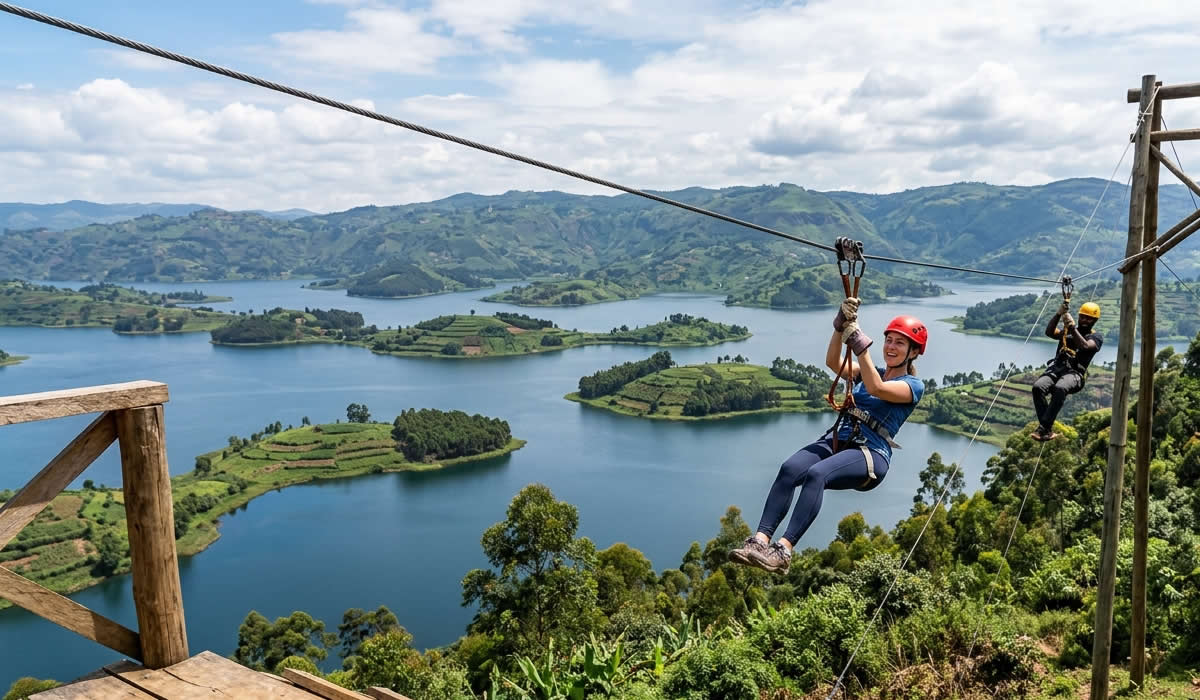
Ziplining in Uganda has rapidly grown from a niche outdoor activity into one of the country’s most exciting adventure tourism experiences. At the same time, Uganda is globally famous for gorilla trekking, wildlife safaris, and breathtaking landscapes; however, a new travel dimension is now rising aerial adventure tourism.
Today, ziplining offers travelers a thrilling way to explore Uganda’s landscapes from above. In addition to that, it combines adrenaline, nature immersion, and scenic exploration into one unforgettable experience.
What makes ziplining in Uganda unique is not only the thrill of flying through the air but also the environments where it takes place. Unlike many destinations that build artificial adventure parks, Uganda places zipline courses inside real natural ecosystems such as tropical rainforests, lake regions, river valleys, and conservation areas.
As a result, this transforms ziplining from a simple activity into a powerful nature-based experience. Travelers do not just glide through the air instead, they fly above living ecosystems filled with biodiversity, scenic views, and untouched landscapes.
Why Ziplining in Uganda Is Becoming a Top Adventure Tourism Activity
Uganda’s tourism industry has traditionally focused on wildlife safaris and national parks. However, the industry has now expanded into adventure tourism in Uganda, driven by global demand for immersive travel experiences.
Ziplining fits perfectly into this shift because it delivers instant excitement, requires no technical training, and offers a visually rich experience suitable for all types of travelers. Moreover, it integrates easily into broader safari itineraries.
Uganda’s natural geography strongly supports this growth. The country features:
- Dense tropical forests
- Rolling green hills
- River valleys and wetlands
- Lake-dominated landscapes
Because of this, these environments naturally support canopy ziplining experiences in Uganda, making the country one of East Africa’s emerging adventure destinations.
Mabira Forest Ziplining: Uganda’s Most Popular Canopy Adventure

Mabira Forest remains the leading destination for ziplining in Uganda. Located between Kampala and Jinja, it is one of the largest surviving natural rainforests in central Uganda and a key biodiversity hotspot.
Ziplining in Mabira Forest offers more than adrenaline. Instead, it delivers a full eco-adventure experience in Uganda’s rainforest canopy.
As travelers move between platforms, they glide above thick vegetation, ancient trees, and forest wildlife habitats. At the same time, the experience combines speed, height, and natural sounds to create a deeply immersive journey.
Unlike artificial adventure parks, Mabira offers a real ecosystem experience. The forest remains untouched in many areas, therefore giving visitors a rare opportunity to explore Uganda from above.
The course also builds confidence gradually through multiple zipline sections, making it ideal for beginners and first-time zipliners in Uganda. Additionally, its proximity to Kampala and Jinja makes Mabira one of the most accessible adventure tourism sites in Uganda.
Lake Bunyonyi Ziplining: Scenic Aerial Views Over Africa’s Most Beautiful Lake

Lake Bunyonyi in southwestern Uganda offers one of the most scenic ziplining experiences in Africa.
Unlike forest canopy ziplining, Lake Bunyonyi ziplining focuses on open landscape adventure tourism. Travelers fly above terraced hills, calm waters, and small islands spread across the lake.
The lake is widely recognized as one of the most beautiful lakes in Africa due to its:
- Deep blue waters
- Steep green hills
- Island-dotted scenery
- Peaceful natural atmosphere
Because of this, ziplining here emphasizes scenery over extreme adrenaline. Travelers enjoy smooth aerial rides with uninterrupted panoramic views.
This makes Lake Bunyonyi ideal for travelers who prefer scenic adventure activities in Uganda rather than high-intensity experiences. In fact, it also pairs perfectly with gorilla trekking in nearby national parks, making it a popular addition to Uganda safari itineraries
Jinja Ziplining Adventures
Jinja is widely known as Uganda’s adventure capital due to its famous white-water rafting experiences on the Nile River. However, the region is now expanding into aerial adventure tourism in Uganda, including ziplining.
Ziplining in Jinja combines river landscapes, forest patches, and elevated viewpoints. As a result, this creates a dynamic aerial experience where travelers see the Nile River and surrounding terrain from above.
What makes Jinja especially attractive is the ability to combine multiple adventure activities in one destination:
- White-water rafting on the Nile
- Ziplining experiences
- Boat cruises and kayaking
- Nature walks and cultural tours
Therefore, this variety makes Jinja one of the most versatile adventure tourism destinations in East Africa.
What Makes Ziplining in Uganda Different From Other Countries
Ziplining exists globally, but Uganda offers a completely different experience due to its natural and cultural context.
1. Real Natural Ecosystems
Unlike many countries that build artificial zipline parks, Uganda integrates ziplining into real ecosystems such as forests, lakes, and valleys.
2. Exceptional Biodiversity
In addition, travelers fly above landscapes rich in wildlife, tropical vegetation, and unique ecosystems that are rarely seen elsewhere.
3. Integrated Safari Experience
Ziplining in Uganda is rarely a standalone activity. Instead, it forms part of a broader safari experience that includes wildlife viewing, trekking, and cultural exploration.
4. Accessibility for All Travelers
Most ziplining experiences in Uganda require no prior training. As a result, they are suitable for families, solo travelers, and adventure groups.
What to Expect During a Ziplining Experience in Uganda
A typical ziplining experience in Uganda begins with a professional safety briefing led by trained guides.
During this briefing, participants learn:
- How to use the equipment
- Body positioning techniques
- Safety procedures during flight
- Landing instructions
After that, guides fit participants with helmets, harnesses, and safety gear. They inspect every connection point before the activity begins.
The experience then moves through a series of zipline sections connected by platforms. Each section offers a different height, speed, and landscape view.
Once participants step off the platform, they immediately experience a combination of wind, speed, and elevation that creates a strong sensation of flight.
Guides manage every landing to ensure safety and smooth transitions between sections. Gradually, most travelers move from nervous anticipation to confidence and enjoyment as the experience progresses.
Safety Standards for Ziplining in Uganda
Safety remains a top priority across all ziplining operators in Uganda.
Operators regularly inspect:
- Cables
- Harnesses
- Platforms
- Safety anchors
In addition, trained guides supervise every activity and assist participants throughout the experience.
Before starting, participants receive clear instructions designed to improve safety and comfort during the activity.
Although ziplining is an adventure sport, Uganda maintains structured safety systems that significantly reduce risks and ensure controlled operations.
Best Time for Ziplining in Uganda
Ziplining in Uganda operates throughout the year due to the country’s stable tropical climate.
Dry Season (Best Conditions)
During this period, the dry season offers:
- Clear visibility
- Stable weather
- Comfortable riding conditions
Therefore, this is the most popular time for ziplining in Uganda.
Wet Season (Scenic Experience)
On the other hand, the rainy season provides:
- Lush green landscapes
- More dramatic scenery
- Enhanced forest atmosphere
Ultimately, both seasons deliver unique and rewarding experiences, making ziplining a year-round activity in Uganda.
Ziplining Prices in Uganda
Ziplining in Uganda remains one of the most affordable adventure activities compared to similar experiences in other countries. Prices vary depending on location, operator, and package inclusions.
On average, travelers can expect:
- Mabira Forest: $25 – $45 per person
- Jinja: $30 – $60 per person
- Lake Bunyonyi: $20 – $50 per person
In most cases, operators include safety gear, professional guides, and briefing sessions in the price.
Best Ziplining Tour Operators in Uganda
Several reputable operators offer safe ziplining experiences.
Some of the most reliable include:
- Mabira Forest adventure operators
- Jinja-based adventure companies
- Lake Bunyonyi eco-tourism providers
When choosing, travelers should prioritize:
- Verified safety standards
- Certified guides
- Positive reviews
- Clear pricing
How to Book Ziplining in Uganda (Step-by-Step Guide)
Booking a ziplining experience in Uganda is simple and can be done online, through a tour operator, or directly at the site depending on the destination.
Here is the typical booking process:
- Choose your destination
Select Mabira Forest, Jinja, or Lake Bunyonyi based on your itinerary. - Select a tour operator or package
Decide whether you want ziplining alone or a combined adventure package. - Confirm availability
Book in advance during peak tourist seasons to secure your preferred time slot. - Make payment or deposit
Most operators require either full payment or a booking deposit. - Receive confirmation details
You will get details including meeting point, time, and safety instructions. - Arrive and participate
Show up on time and follow the safety briefing provided by your guides.
Advance booking is highly recommended for travelers combining ziplining with gorilla trekking or safari tours.
Ziplining Cost in Uganda and Value for Money
The cost of ziplining in Uganda depends on the location, operator, and course length. However, it remains more affordable compared to similar adventure experiences in many international destinations.
Pricing typically includes:
- Safety equipment
- Professional guides
- Insurance coverage
- Site maintenance
- Conservation support fees
Despite being a short activity, ziplining offers high value due to its combination of adrenaline, scenery, and immersive nature experiences.
Combining Ziplining With Uganda Safari Packages
Ziplining fits easily into most Uganda safari itineraries.
Travelers often combine it with:
- Gorilla trekking in Bwindi Impenetrable Forest
- Wildlife safaris in national parks
- Cultural village experiences
- Nile River adventures in Jinja
This combination creates a balanced travel experience that includes both ground-level exploration and aerial adventure.
For example, travelers can explore rainforests during gorilla trekking and then experience the same ecosystem from above through ziplining.
Ziplining vs Canopy Walk in Uganda: What’s the Difference?
Many travelers confuse ziplining with canopy walk experiences, but they offer very different adventure styles.
Ziplining in Uganda
Ziplining focuses on speed, adrenaline, and aerial movement. Travelers glide through the air at high speed while attached to a cable system.
- High adrenaline level
- Fast movement across platforms
- Strong thrill factor
- Ideal for adventure seekers
Canopy Walk in Uganda
Canopy walks focus on slow exploration and observation. Travelers walk across suspended bridges within forest canopies.
- Low adrenaline, high observation
- Slow-paced experience
- Strong focus on nature and wildlife viewing
- Ideal for photographers and nature lovers
Key Difference
Ziplining gives a flight experience, while canopy walks provide a walking-in-the-sky experience.
Both activities complement each other and are often combined in Uganda safari itineraries for a complete forest experience.
Why Ziplining in Uganda Is Growing Rapidly
Several key factors drive the rapid growth of ziplining in Uganda:
- Global demand for experiential travel
- Uganda’s natural landscape diversity
- Improved tourism infrastructure
- Social media exposure and travel content
- Increased interest in adventure tourism in East Africa
These factors position ziplining as one of Uganda’s fastest-growing tourism activities.
FAQs About Ziplining in Uganda
1. Is ziplining in Uganda safe for tourists?
Yes. Licensed operators use professional safety systems, trained guides, and regularly inspected equipment to ensure full safety.
2. Where is the best ziplining location in Uganda?
Mabira Forest offers the most popular canopy experience, while Lake Bunyonyi and Jinja provide scenic and mixed adventure options.
3. Do I need experience to go ziplining?
No experience is required. Guides provide full instructions before the activity begins.
4. What should I wear for ziplining in Uganda?
Wear comfortable clothing and closed shoes. Avoid loose items like scarves or unsecured accessories.
5. Can children participate in ziplining?
Yes, but age and weight limits depend on the operator. Most allow supervised participation for older children.
6. How long does ziplining take?
Most experiences last between 1 to 3 hours depending on the location and number of zipline sections.
7. What is the best time of year for ziplining in Uganda?
Ziplining operates year-round, but the dry seasons offer the most stable weather and clear views.
Conclusion: Why Ziplining in Uganda Deserves a Top Spot on Your Travel List
Ziplining in Uganda offers more than an adrenaline rush. It provides a completely new way to experience the country’s landscapes from above.
From Mabira Forest’s canopy adventure to Lake Bunyonyi’s scenic views and Jinja’s adventure-filled environment, each destination offers a unique perspective of Uganda.
The activity combines accessibility, safety, and natural beauty, making it suitable for a wide range of travelers.
For anyone planning a Uganda safari or adventure holiday, contact us for ziplining that also adds a powerful and memorable dimension to the journey. It enhances wildlife experiences, expands scenic exploration, and creates lasting travel memories.


